The Post · The Hague · 1697
Before Envelopes
The letter was its own envelope. People folded it into locks, sealed it with wax or with a dab of flour paste, crammed every inch with writing, and drew in the margins. And the person receiving it was the one who paid.
A century ago, a trunk came into the collection of the Dutch postal museum in The Hague. It was full of other people’s mail.
It had belonged to Simon de Brienne and his wife Marie Germain, who ran a postal business in The Hague at the end of the 1600s, carrying letters between France and the Low Countries and beyond. The trunk held 3,148 items, sent between 1689 and 1706, that had never been delivered. In those days the person receiving a letter paid the postage, not the sender. If the addressee had moved, or died, or simply didn’t want to pay, the letter stayed with the postmaster. The Briennes kept theirs, in case someone came back for them. Nobody ever did.
577 of those letters had never been opened. They were still folded and sealed the way their writers had left them more than three hundred years ago.
The letter was its own envelope
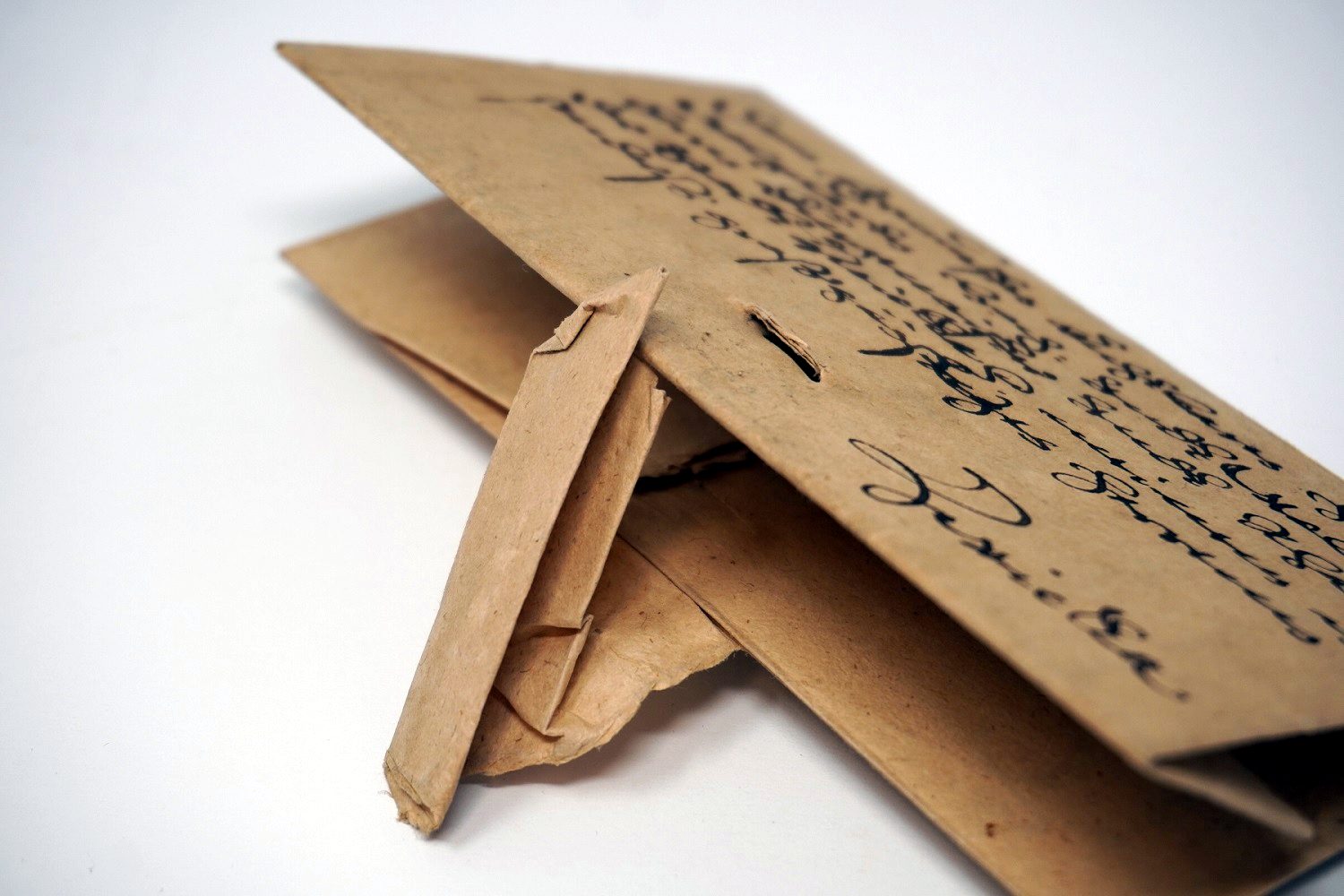
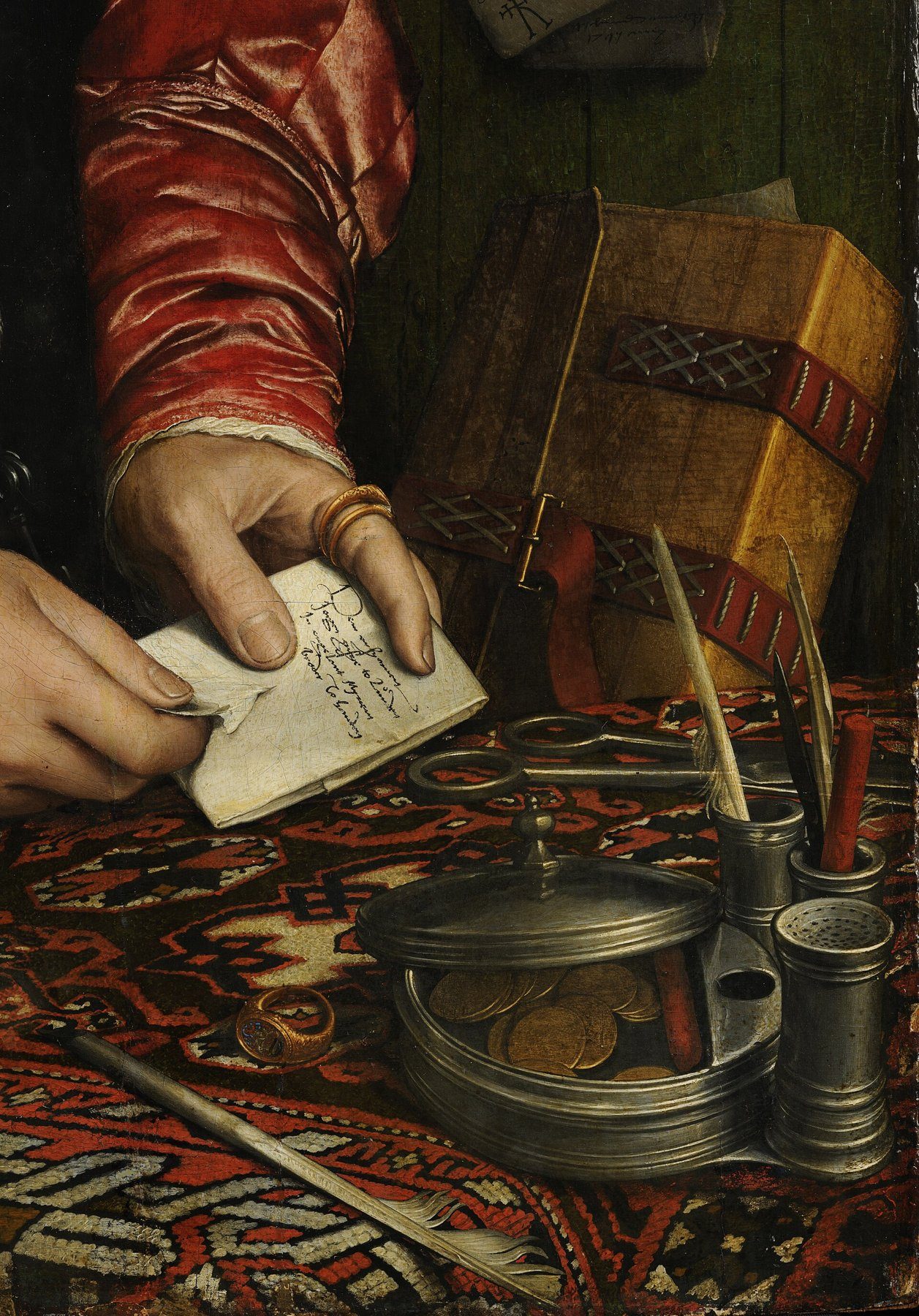
To understand why that’s remarkable, you have to forget the envelope. Envelopes as we know them didn’t really take over until the middle of the nineteenth century. Before that, you wrote on one side of a sheet and folded the sheet itself into a packet. The address went on the outside and the message on the inside. Then you sealed it.
People didn’t just fold, though. They locked. They cut a narrow strip from the edge of the page, sliced little slits through the folded packet, and threaded the strip through, then tucked, glued and sealed it. A letter like that couldn’t be opened without tearing something, so if anyone read it on the way, the recipient would know. The conservator Jana Dambrogio, who has spent years rediscovering these techniques, gave the practice a name: letterlocking.
There were dozens of designs, from simple tuck-and-seal folds to locks so intricate they have to be reverse-engineered in a lab. Mary, Queen of Scots wrote her last letter at around two in the morning on the day of her execution, 8 February 1587, to her brother-in-law Henri III of France. She closed it with a spiral lock: a long, thin strip cut from the page and wound through a series of tiny slits, about as secure as paper gets.
Reading a letter without opening it
So what do you do with 577 sealed letters? You could slice them open. That gets you the words but destroys the lock, and the lock is evidence too: how the writer folded it tells you who they were, what they feared and what they could afford. For decades the answer was to leave them alone.
In 2021 a team including Dambrogio published a way round the problem. They put the sealed letters into an X-ray micro-tomography scanner, a sort of extremely fine CT scanner, built originally for dental research, and let software virtually unfold the packet, layer by layer, into a flat, readable page. The paper was never touched.
The first letter they read was dated 31 July 1697. It was from a man named Jacques Sennacques to his cousin Pierre Le Pers, a French merchant in The Hague. It wasn’t a love letter or a state secret. Sennacques wanted Le Pers to get him a certified copy of the death notice of a certain Daniel Le Pers. It was family admin, in other words, waiting three hundred and twenty-four years to be read. We find that more moving than any state secret would be.
Every inch of the page
Because paper was dear and postage was charged per sheet, nobody wasted a corner. In Britain, before the Penny Post began in January 1840, a letter’s cost depended on how far it went and how many sheets it used, and the recipient paid on delivery. So people wrote across the page, then turned it ninety degrees and wrote across their own lines.
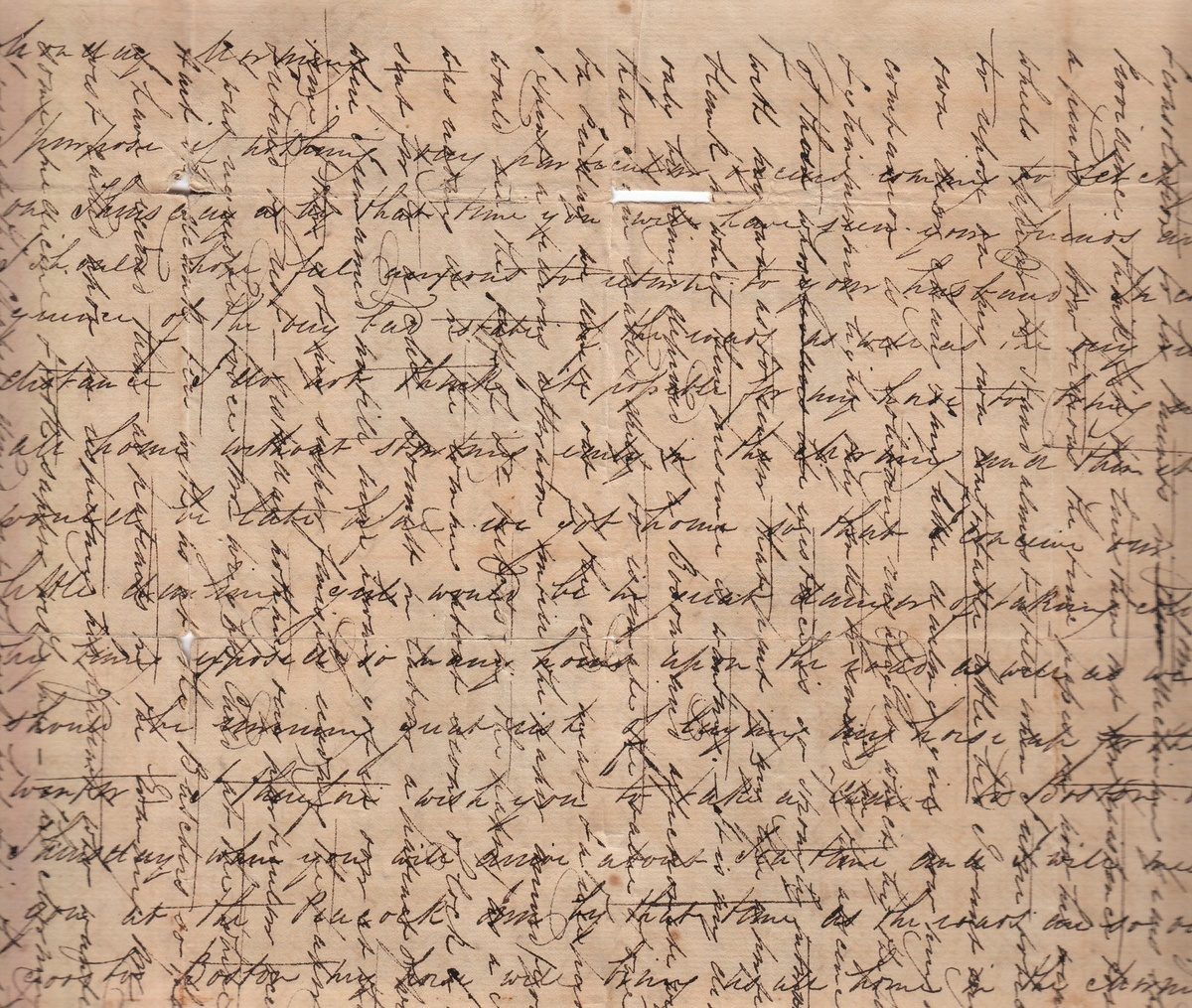
When the Penny Post arrived, with one cheap stamp and the sender paying, it changed what a letter was. It became cheap, frequent and casual. The Penny Black, the world’s first adhesive stamp, became valid on 6 May 1840, and envelopes came in with it.
Pictures in the post
And yes, people drew in letters, constantly, because a quick sketch carried what words couldn’t.
Vincent van Gogh filled his letters to his brother Theo with drawings of the painting he was working on, the room he was sitting in, the orchard down the road. More than 130 of his letter sketches survive, and every letter is online, transcribed and translated, at vangoghletters.org. Reading them in order is the closest thing there is to looking over his shoulder.
On 4 September 1893, Beatrix Potter wrote to Noel Moore, the five-year-old son of her former governess, who was ill in bed. She didn’t know what to say to a sick child, so she drew him a story instead:
My dear Noel, I don’t know what to write to you, so I shall tell you a story about four little rabbits whose names were Flopsy, Mopsy, Cotton-tail and Peter.
That illustrated letter, eight pages of pen-and-ink rabbits, became The Tale of Peter Rabbit. The original is in the Morgan Library in New York.
What a letter is for
Look at all of this together, the locks, the wax, the crossed lines, the rabbits in the margins, and it says something we tend to forget. A letter wasn’t only words. It was an object, made by hand for one particular person and shaped by what it cost, by who might read it on the way, and by how far it had to go. Each one carries little traces of its own life.
Some of them are still sealed, waiting.
Go see it
- Online
MIT Libraries. Videos showing how hundreds of historical letters were folded and locked.
- Online
Vincent van Gogh's letters, with the sketches he drew into them
vangoghletters.org (Van Gogh Museum and Huygens Institute). Free, transcribed and translated.
- Online
The Darwin Correspondence Project
Cambridge University Library. More than 15,000 letters to and from Charles Darwin.
- In a museum
Beatrix Potter's picture letter to Noel Moore, 4 September 1893
The Morgan Library & Museum, New York. The letter where Peter Rabbit was born.
- In a museum
Mary, Queen of Scots' last letter, 8 February 1587
National Library of Scotland, Edinburgh. Fragile and only rarely shown.
Read further
Images: Deutsches Buch- und Schriftmuseum (DNB Ellen Wrogemann) [1] · CC BY 3.0 de / Hans Holbein the Younger · Public domain / Letter - unknown; image - Jim Linderman · Public domain


