The Cabinet · The Lake District · 1769
The Mirror You Looked Into With Your Back to the View
Eighteenth-century tourists walked to the best viewpoint in the Lake District, turned round, and looked at it in a small dark mirror. Meet the Claude glass, the phone screen of the 1770s.
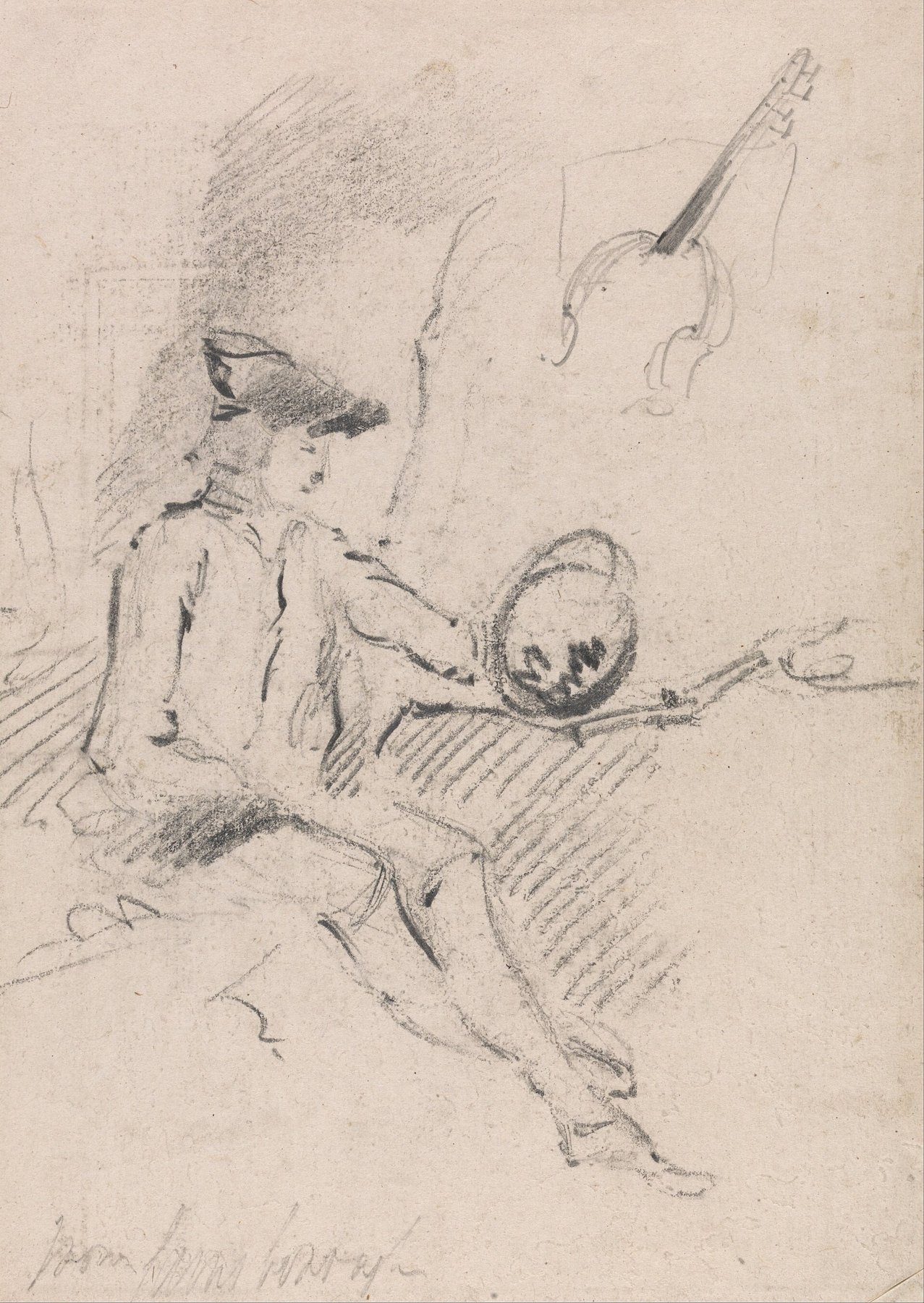
Picture the scene. It’s early October 1769, in the Lake District. A small, fussy, brilliant Cambridge don named Thomas Gray, the man who wrote the Elegy Written in a Country Churchyard, is walking near Keswick with the sun going down over the fells. He has a little mirror open in his hand. He is looking into it, not at the sunset, and he goes down flat on his back in the lane.
He wrote it up in his journal that night, with what sounds like great dignity. He “fell down on my back across a dirty lane with my glass open in one hand, but broke only my knuckles: staid nevertheless, and saw the sun set in all its glory.”
The glass was a Claude glass, and for about half a century, anyone with a sketchbook and pretensions to taste carried one.
What it was
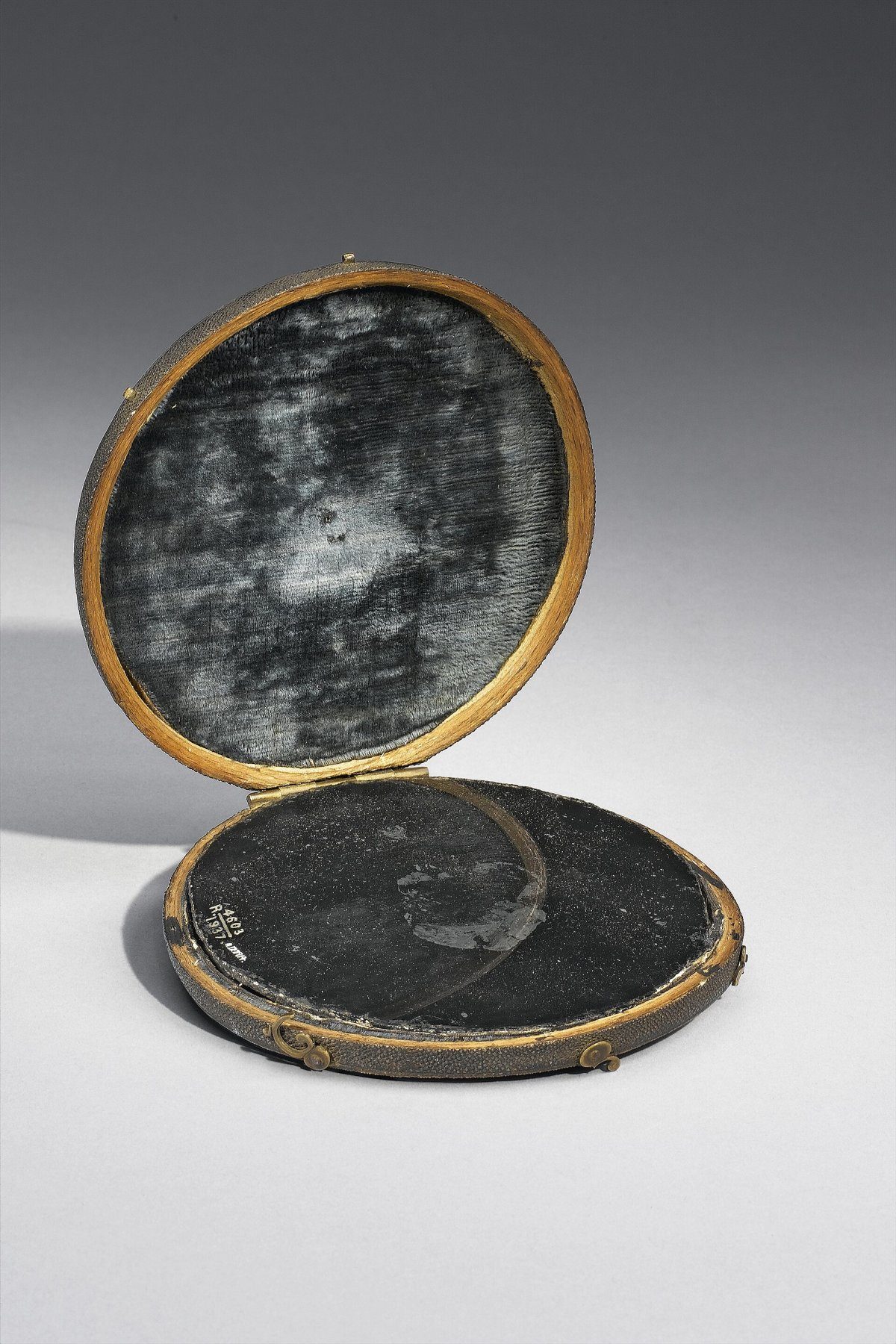
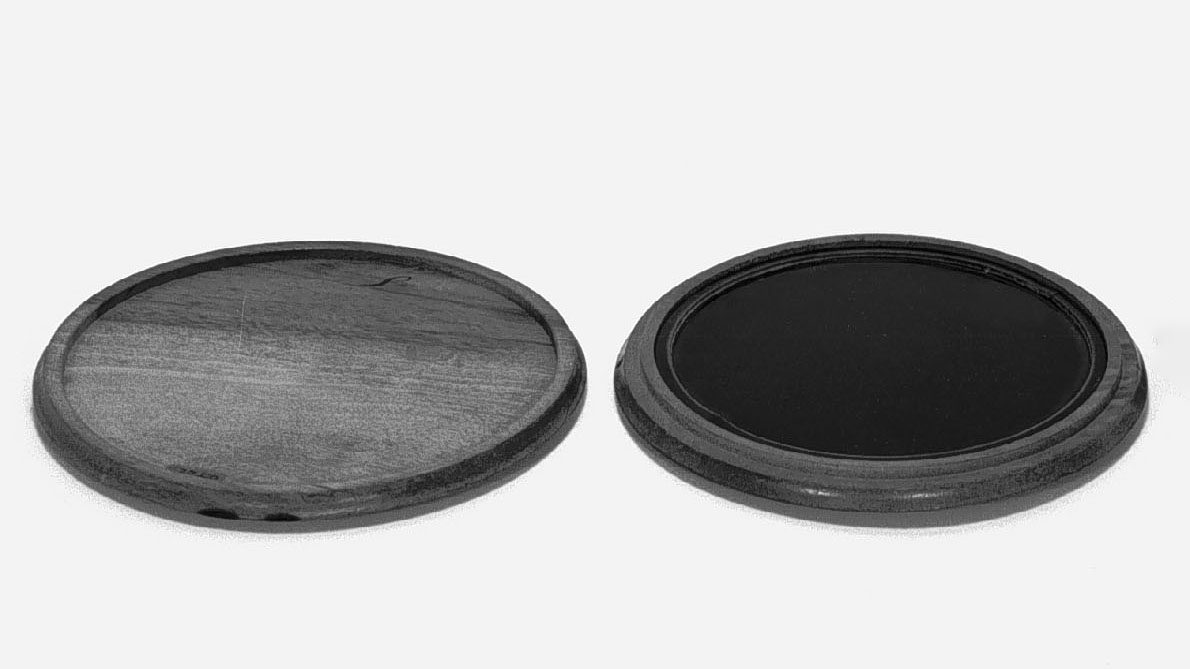
It’s a small convex mirror, usually about the size of your palm, backed with black or dark-tinted foil. It folds into a case like a powder compact, lined in velvet and covered in leather or sharkskin. Some came in sets of tinted glasses, one for a warm golden evening, one for a cool silvery dawn.
You used it like this. You found the celebrated viewpoint, turned your back on it, and held the mirror up over your shoulder. The landscape behind you appeared in the glass shrunk down, framed, and softened. The dark tint compressed the colours into a narrow, harmonious range. The convex curve squeezed a wide view into one composed picture, and the glare and fuss of real daylight melted into something hazy and golden.
Why on earth would you do that?
Because of Claude Lorrain. Claude was a French painter who had worked in Rome in the 1600s, and he painted the Italian countryside as a golden dream: ruined temples, feathery trees, shepherds, and a low sun dissolving the horizon into light. English collectors went mad for him. Grand Tourists carried his paintings home from Rome by the dozen, and a whole generation learned what a beautiful landscape was supposed to look like by looking at Claudes.
So when those same people went out into actual countryside, real nature was a slight disappointment. It was too green, too bright, too sprawling. The mirror fixed that. It turned the real view into a Claude, and it gave a name to a whole way of looking: the picturesque, which meant, quite literally, “like a picture.”
The great preacher of the picturesque was a clergyman called William Gilpin. His Observations on the River Wye, published in 1782, taught tourists to rate a landscape the way you’d critique a painting. Was the foreground right? Was that castle placed correctly? He meant it. He once suggested that a ruined abbey would look better if someone took a mallet to some of its gables.The abbey was Tintern, and Gilpin thought its gable ends were too regular. Readers have been arguing ever since about how seriously he meant it. Our guess: about seventy per cent seriously. By the 1780s the lakes and the Wye valley were crowded with tourists, guidebooks in one hand, mirrors in the other, hunting for the approved spots to stand.
And you, reading this on a screen
You can see where this is going, and it would be easy to be smug about it: oh, those silly Georgians, turning their backs on nature to stare at a little black rectangle. But every one of us has stood at a famous viewpoint, raised a dark glass rectangle, framed the view, tweaked the warmth, and looked at the screen instead of the hill. Some of us have even done it walking backwards.
The Claude glass isn’t really a joke about the past. It’s evidence that the urge is very old: to tidy the world into a picture, to make a moment look like the art we already love, to take something home. Gray used his and stayed to watch the sun go down “in all its glory” anyway. That seems the right balance. Frame it, then put the glass away and look.
If you want to hold the idea in your hands, the V&A has a lovely example on display. And if you want to stand where those tourists stood, the shell of the Claife Viewing Station is still above Windermere. Its windows were once coloured glass, so visitors could see the lake in summer gold or winter blue. Climb up at the end of a clear afternoon, turn your back on the lake, and imagine.
Go see it
- Online
Gainsborough's sketch of a man with a Claude glass
British Museum collection online (Oo,2.27). Not usually on display.
- Online
Claude Lorrain mirrors in the Science Museum Group collection
Including the shagreen-cased glass once believed to be John Dee's magic mirror
- On the street
Claife Viewing Station
The west shore of Windermere, above the ferry landing near Far Sawrey. National Trust, free.
A ruined Gothic viewing house built for picturesque tourists in the 1790s. Its windows were once glazed in coloured glass, so the view could be tinted like a painting.
Read further
- Thomas Gray's journal of his tour of the Lakes, 1769 (Mapping the Lakes, Lancaster University)
- William Gilpin, Observations on the River Wye (1782)
- Claude glass (overview)
Images: Thomas Gainsborough · Public domain / CC BY 4.0 / Unknown at National Museum of Science and Technology (Sweden) · CC BY 4.0


From around the same time
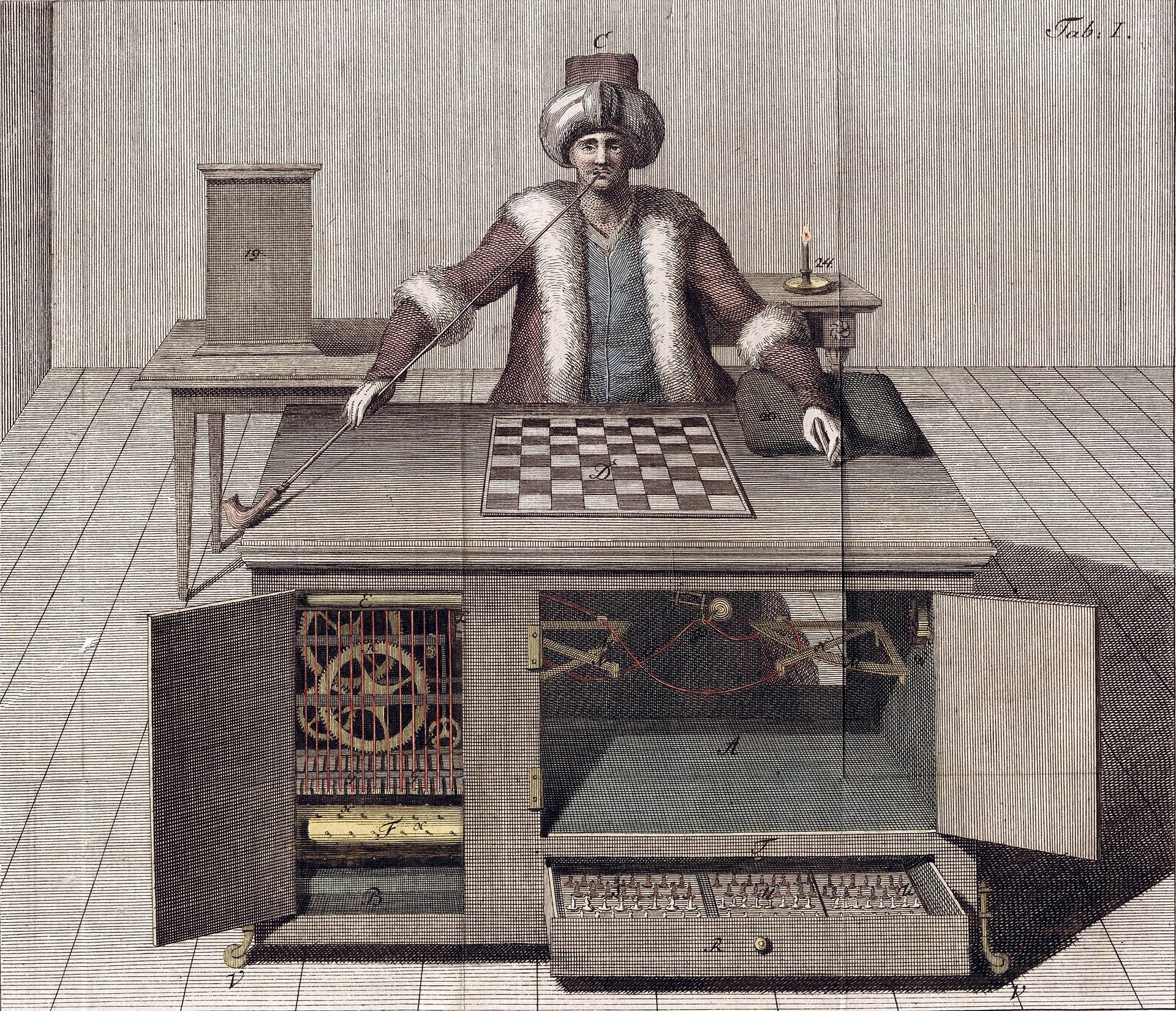
The Chess Machine With a Man Inside
For eighty-four years a mechanical Turk in a turban beat the best players in Europe and America, and supposedly Napoleon too. Clever people spent all that time arguing about how the machine worked. The right answer was the boring one, and it's worth asking why it was so hard to say out loud.
The Most Beautiful Statue in the World (Allegedly)
For two centuries the Venus de' Medici was the thing you crossed Europe to see. Today most people walk past it on the way to the Botticellis. Either our ancestors were wrong, or we are, and both possibilities are more interesting than they sound.
The Ambassador Who Kept Climbing the Volcano
Britain's envoy to Naples was meant to be doing diplomacy. Instead Sir William Hamilton climbed Vesuvius dozens of times, wrote it all up for the Royal Society, and hired a painter to record what he saw. The result is one of the most beautiful science books ever printed.