Natural Philosophy · Naples · 1776–1779
The Ambassador Who Kept Climbing the Volcano
Britain's envoy to Naples was meant to be doing diplomacy. Instead Sir William Hamilton climbed Vesuvius dozens of times, wrote it all up for the Royal Society, and hired a painter to record what he saw. The result is one of the most beautiful science books ever printed.
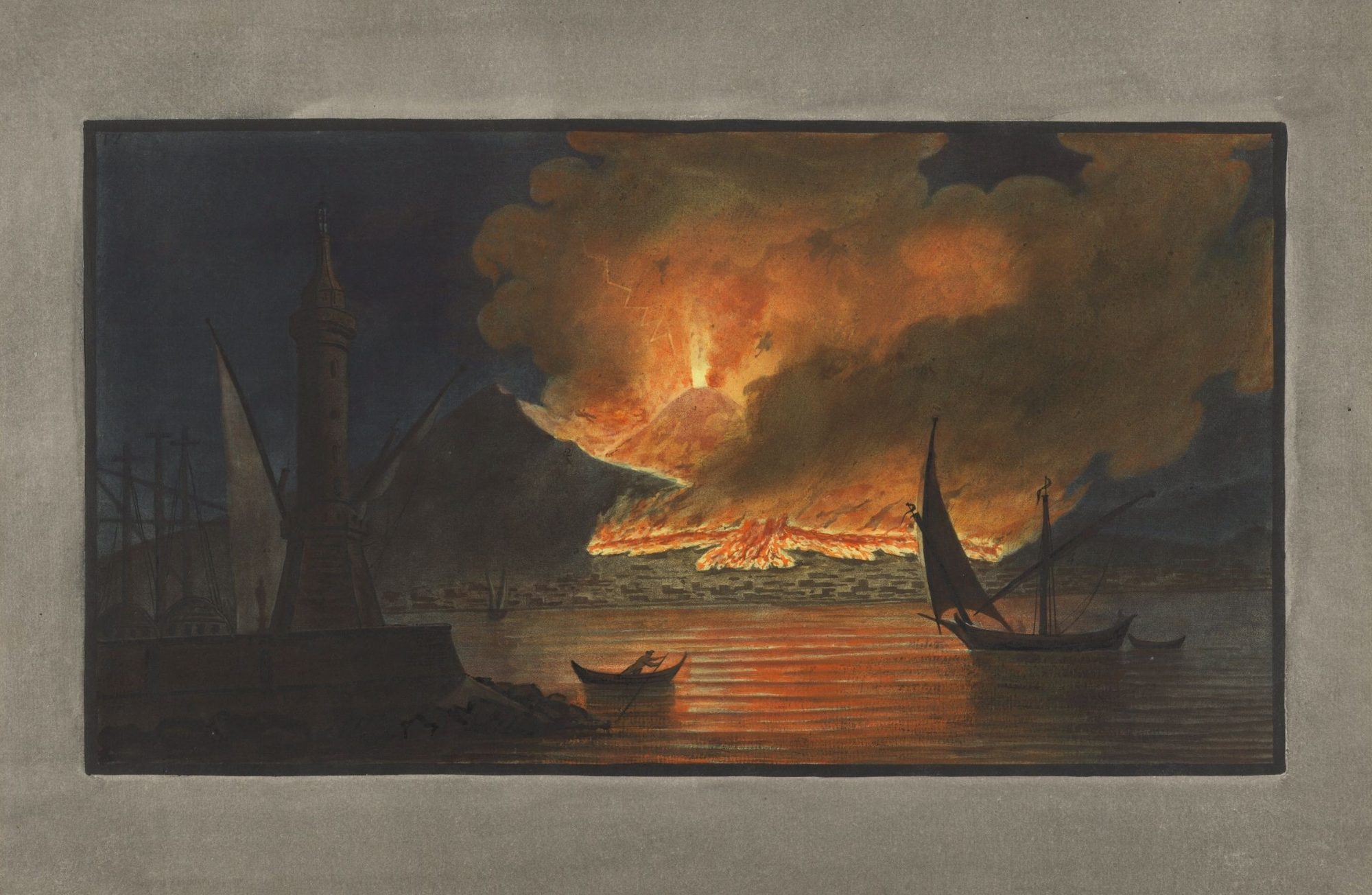
When William Hamilton arrived in Naples as the British envoy, on 17 November 1764, the job description was mostly ceremonial. Keep the King of Naples friendly, host visiting English lords, and report home now and then. Naples was a sleepy posting, and Hamilton had a great deal of free time.
He spent it on the volcano.
Vesuvius was restless all through his years in Naples. It erupted in 1767 and again, spectacularly, in 1779. Hamilton went up it again and again, by day and by night, in quiet spells and in the middle of eruptions, sometimes rather closer to the lava than his guides would have liked. Accounts of how many times he climbed it vary. The figure usually quoted is more than sixty, and by any count he climbed it dozens of times.
Letters to the Royal Society
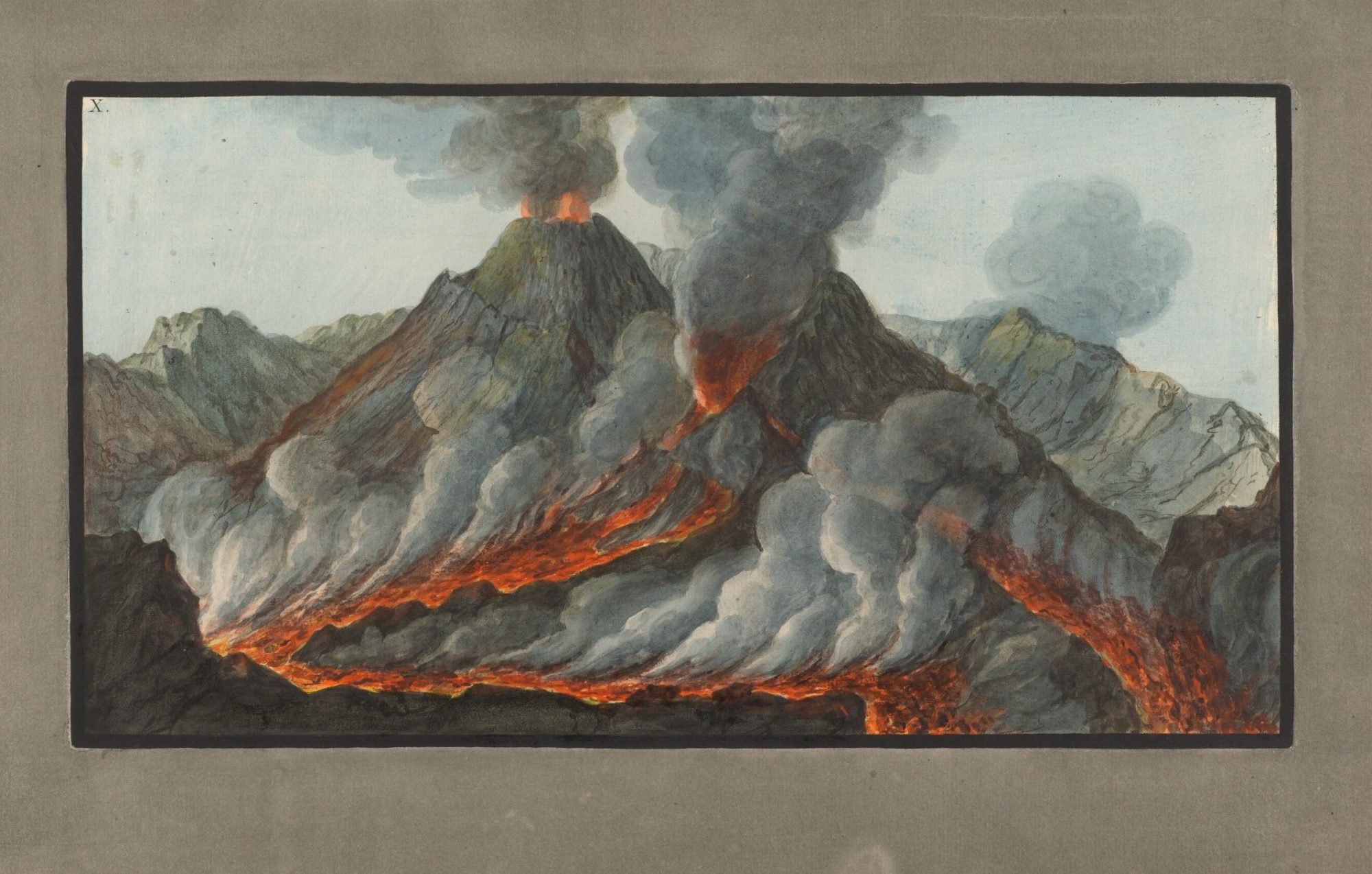
Here’s what makes Hamilton more than a thrill-seeker in a wig: he wrote it all down. He sent long, careful letters to the Royal Society in London describing what he saw, including the colour of the smoke, the sound of the explosions, how fast the lava moved, the ash that fell on the city, and the shapes of the old craters around the bay. They were printed in the Society’s Philosophical Transactions, and they read like dispatches from the front.
This was the 1760s and 70s. “Geology” was barely a word yet, and people were having a lively argument over where rocks and mountains came from in the first place. Were they laid down by water, or made by fire? Hamilton was standing on the clearest evidence in Europe. Day after day he watched a mountain build itself, layer by layer, out of its own eruptions, and he came to see volcanoes as makers of landscape and not just destroyers of it. The country around Naples, he argued, was the work of fire.
Fifty-four plates of fire
Words weren’t enough, and Hamilton knew it. So he hired a local painter, Pietro Fabris, to come out with him and paint what they saw: the craters, the eruptions, the strange rocks, the night skies over the bay.
In 1776 Hamilton published his letters together with Fabris’s pictures as Campi Phlegraei, “The Burning Fields,” after the volcanic country west of Naples. It came out in Naples in two big volumes, with English and French text side by side and fifty-four plates, every one of them coloured by hand. After the great eruption of 1779 he added a supplement with five more.
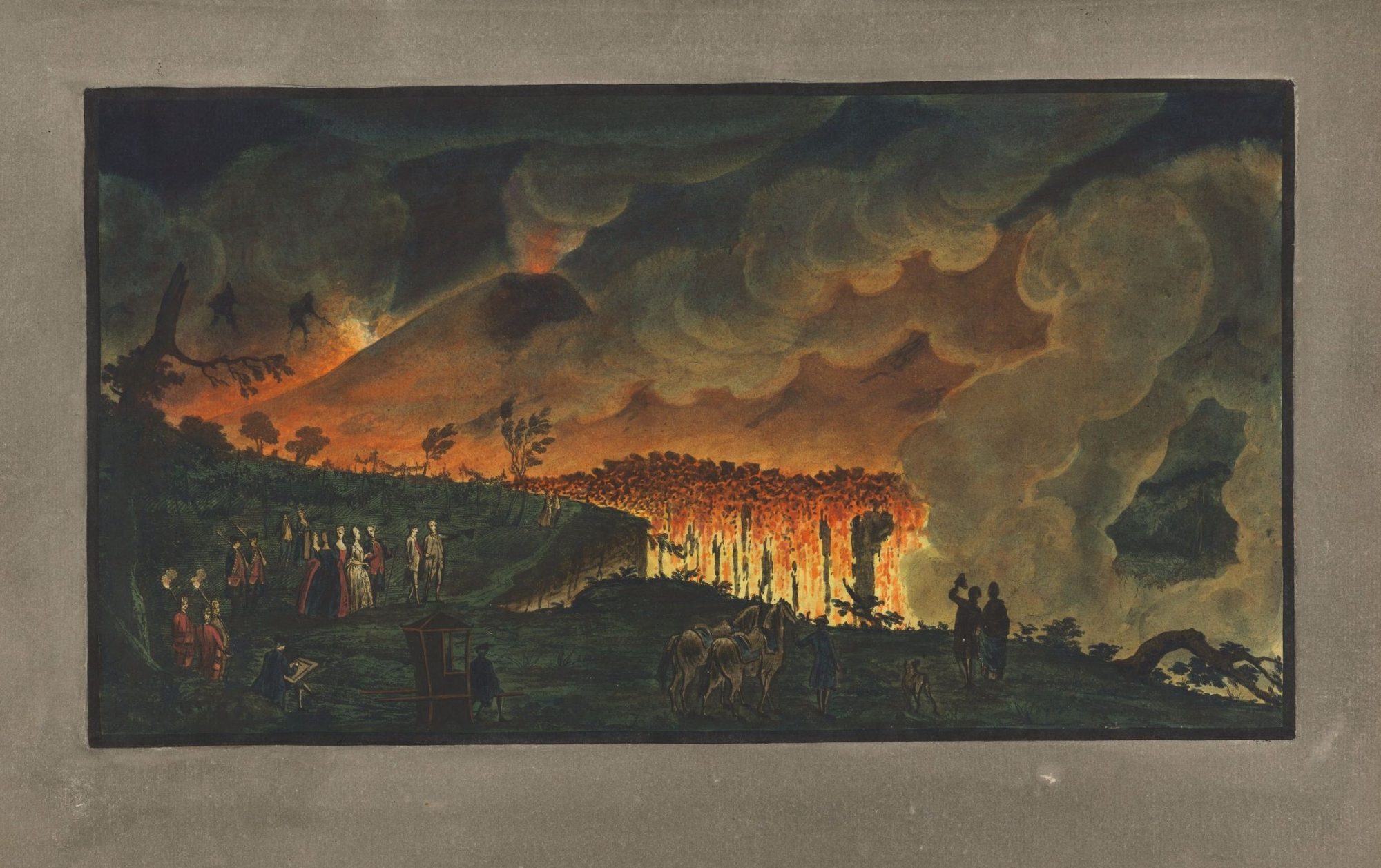
It’s a scientific report, but it doesn’t look like one. Fabris’s plates are lush, theatrical gouaches: rivers of lava glowing in the dark, fireworks of rock over the bay, little groups of spectators in tricorn hats standing at the edge of it all. Hamilton himself turns up among them, playing guide to his visitors. Each plate came mounted in a printed border like a framed picture. It’s a book about rocks, made as lovingly as a book of saints.Books like this cost a fortune to make. Hamilton was also a voracious collector of ancient vases, and in 1772 he sold his first collection to the British Museum, where a good part of it still is.
The volcano as a stop on the Tour
For Grand Tourists, Naples was the far end of the journey, and Vesuvius was its best spectacle. Visitors hired guides in the villages at the foot of the mountain, rode mules partway, then scrambled up through cinders. Some were hauled by guides with straps or ropes. They looked over the rim, came back blackened and thrilled, and bought a souvenir gouache of the eruption from one of the painters who sold them in the city, very much in the manner of Fabris.
Hamilton’s house in Naples became the place every traveller wanted to be invited to, and the envoy himself was often the guide. It’s an odd and appealing picture: a British diplomat, the king’s representative, in a dusty coat at the edge of an active crater, explaining to a party of seasick young lords that the ground they’re standing on is new.
You can still go
Vesuvius last erupted in 1944 and has been quiet since, though it is very much alive and watched around the clock. Today a path called the Gran Cono winds up to the rim of the crater. Tickets are timed and sold online, the climb is short but steep, and from the top you get the whole sweep of the bay, the islands and the city, the same view Fabris painted with the sky on fire.
Take water, and take your time at the top. Then go down to Herculaneum, which the volcano buried in AD 79. It was being dug up while Hamilton was climbing, and he wrote about that too.
Go see it
- On the street
The Gran Cono crater trail, Vesuvius
Vesuvius National Park, above Ercolano. Timed tickets sold online only, up to 30 days ahead.
A steep, dusty half hour up from the car park to the crater rim, with the whole Bay of Naples below you, the same view Hamilton's painter set down in gouache.
- On the street
Herculaneum and Pompeii
Ercolano and Pompei, on the Circumvesuviana train from Naples
Both digs were brand new during Hamilton's years in Naples. Herculaneum was started in 1738 and Pompeii in 1748, and Grand Tourists toured them while the shovels were still out.
- In a museum
Campi Phlegraei, a complete coloured copy
Society of Antiquaries of London, Burlington House
Read further
Images: William Hamilton · Public domain / William Hamilton · Public domain / William Hamilton · Public domain


From around the same time
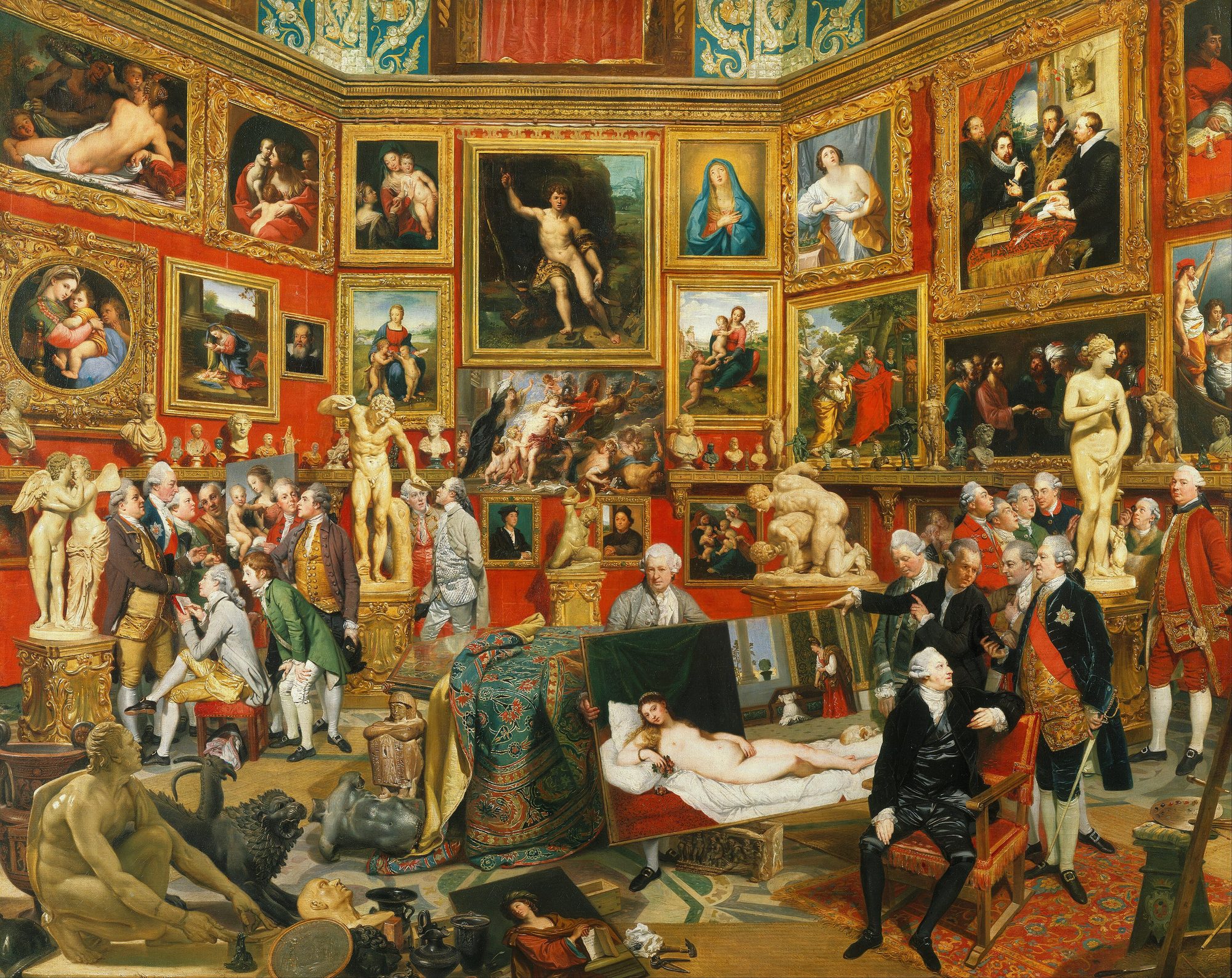
The Most Beautiful Statue in the World (Allegedly)
For two centuries the Venus de' Medici was the thing you crossed Europe to see. Today most people walk past it on the way to the Botticellis. Either our ancestors were wrong, or we are, and both possibilities are more interesting than they sound.
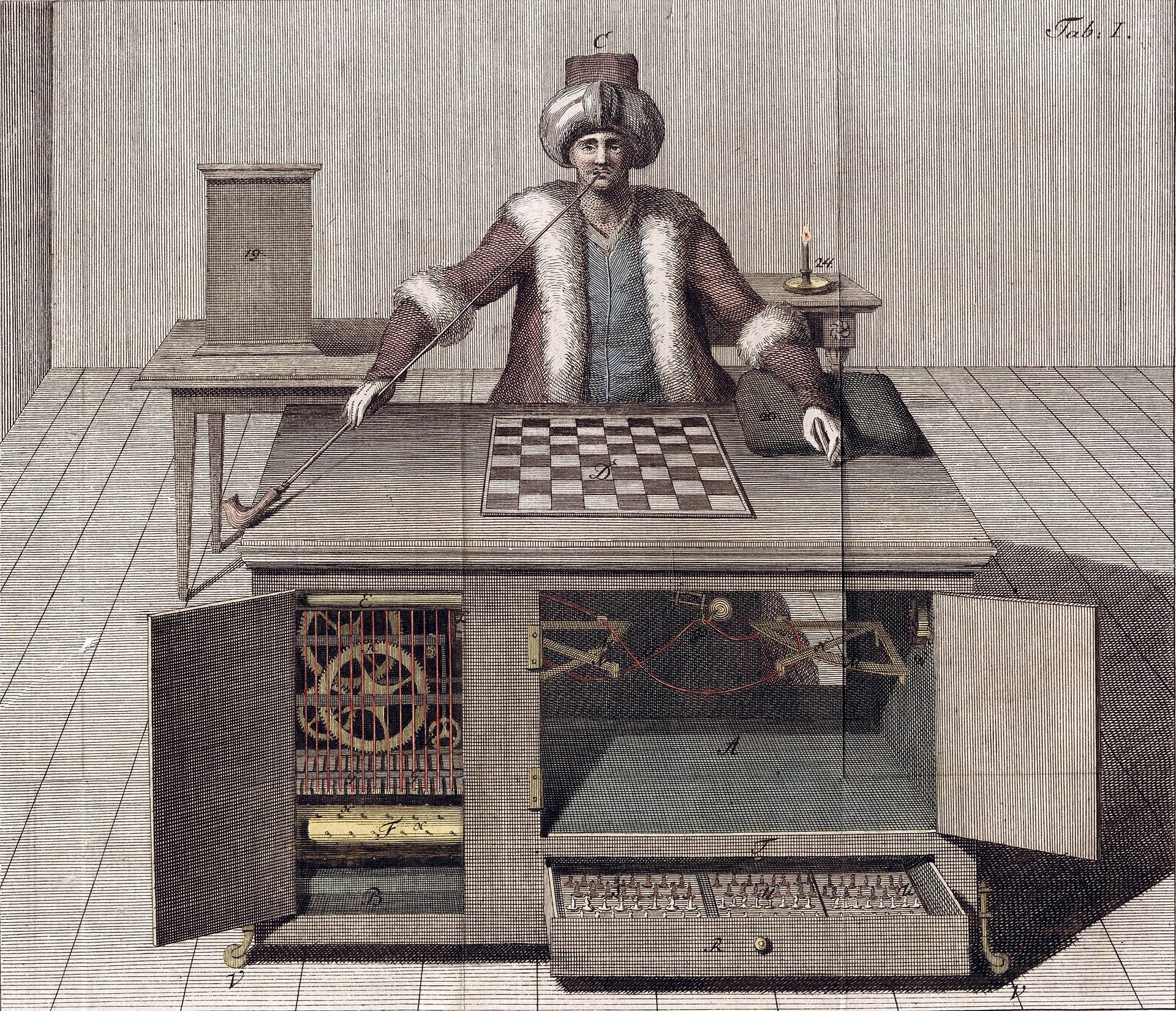
The Chess Machine With a Man Inside
For eighty-four years a mechanical Turk in a turban beat the best players in Europe and America, and supposedly Napoleon too. Clever people spent all that time arguing about how the machine worked. The right answer was the boring one, and it's worth asking why it was so hard to say out loud.
The Mirror You Looked Into With Your Back to the View
Eighteenth-century tourists walked to the best viewpoint in the Lake District, turned round, and looked at it in a small dark mirror. Meet the Claude glass, the phone screen of the 1770s.