Letters from the Tour · Mont Cenis · 1739
Why Did Everyone Hate Mountains Until About 1750?
Grand Tourists crossed the Alps at Mont Cenis in a chair carried by strangers, with their carriage in pieces on the backs of mules, and most of them thought the scenery was hideous. Fifty years later the same view was the most sublime thing on earth. What changed?
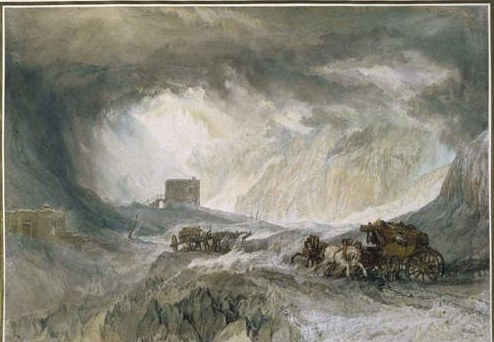
The pass of Mont Cenis, between Savoy and Piedmont
Epistemic status The practicalities of the crossing are well documented. The big question, why the change happened, is a famous historians' argument. I give the main contenders and my own guess, which you should weight accordingly.
I. How you got across
Suppose it’s 1739, and you’re a young Englishman on the Grand Tour. You’ve done Paris, you’ve done Lyon, and now there is a wall of rock between you and Italy. Most travellers crossed it at the pass of Mont Cenis, between Savoy and Piedmont, because that was the least bad option. Here is roughly how it went.
At the village of Lanslebourg, on the Savoy side, your carriage was taken apart. The wheels, the body and the axles were loaded onto mules, which carried them over the mountain in pieces. You, meanwhile, were put in a kind of open chair slung between poles and picked up by a team of local porters, called marrons, who carried you up the mountain, across the high plateau by the lake, and down the other side to Novalesa in Piedmont. There, if all went well, someone reassembled your carriage, and you drove on to Turin as if nothing had happened.
Coming the other way in winter, there was a shortcut. From the top, you could be put on a sledge and sent down the steep slope above Lanslebourg, a run called la Ramasse, steered by a guide sitting in front. Travellers describe it as either the most exhilarating or the most terrifying few minutes of their lives, depending, I assume, on temperament.We have fewer first-hand descriptions of the sledge run than we’d like, so treat the details with some caution. But everyone agrees the porters were remarkably sure-footed, and that most of the travellers were remarkably frightened.
So that’s the logistics. Now the interesting part: what did the travellers think of the view?
II. They mostly hated it
By modern standards, the answer is astonishing. Many of them thought the Alps were hideous: a dreary, barren, dangerous waste of rock that stood between them and the civilised pleasures of Italy. They wrote about the mountains the way you might write about a long layover.
There was a serious intellectual case for this. In 1681 Thomas Burnet published his Sacred Theory of the Earth, which argued that the earth had been created smooth and perfect, a sort of perfect egg, and that mountains were the ruins left behind when the Flood broke its crust. On this view, the Alps weren’t majestic. They were rubble. Wreckage. Warts on the face of the earth, scars of human sin. Looking at a mountain range was like looking at the aftermath of a catastrophe, because, on Burnet’s theory, that was literally what it was.
And then, sometime in the eighteenth century, all of this flipped. By the end of the century the Alps had become the most sublime sight in Europe. Poets climbed them on purpose. In 1786, two men from Chamonix stood on top of Mont Blanc just to see if they could. Turner went over Mont Cenis in a snowstorm and painted it as a cataclysm, and he meant it as the highest praise.
The literary scholar Marjorie Hope Nicolson wrote a whole book about this shift in 1959, called Mountain Gloom and Mountain Glory. The question of why it happened is one of those questions that seems like it should have a simple answer and turns out not to.
III. A small, horrible data point
Before the theories, one story, because it captures the mood of the old Alps better than any treatise.
In November 1739 the writer Horace Walpole was crossing the mountains with his friend the poet Thomas Gray. Walpole had a little dog called Tory, a black spaniel he adored. The day before they reached Mont Cenis, on a mountain road through Savoy, in broad daylight at about two in the afternoon, Walpole let the dog out of the carriage to run alongside. A wolf came out of a wood of fir trees, seized it and carried it off before anyone could do anything.
Walpole was devastated, and wrote about it with real grief. This is the thing to remember about the Alps in 1739: they weren’t scenery. They were somewhere you could be eaten.
IV. Theory one: the Alps got safer, so terror turned into thrill
The first theory is the one I’d bet on if I had to pick only one. It goes back to Edmund Burke, who in 1757 published a famous essay about the difference between the beautiful and the sublime. Beauty, he said, is small, smooth and pleasant. The sublime is vast, dark, overwhelming and frightening. And here is the crucial bit: terror, Burke argued, becomes a kind of delight when we are at a safe distance from it. A storm at sea is horrible if you’re on the ship and magnificent if you’re on the cliff.
So the theory says that, over the eighteenth century, the Alps moved from “on the ship” to “on the cliff.” Roads improved. Inns improved. Guides became more professional. The wolves didn’t go anywhere, exactly, but the odds of being personally inconvenienced by one dropped. Once the mountains were survivable, the same features that had made them horrifying, their scale, their danger, their indifference to you, became thrilling instead.
The best evidence for this theory is the story of the road. In 1803, Napoleon began building a proper carriage road over Mont Cenis, finished around 1810, so that armies and coaches could cross without anyone being carried. And by then, the Romantic cult of mountains was in full swing. The safer the Alps got, the more people loved them.
V. Theory two: theology and geology changed
The second theory is that the change was intellectual. Burnet’s vision of mountains as the ruins of a broken world lost its grip as natural philosophy moved on. If mountains weren’t wreckage left by an angry God, but the product of slow, ancient, natural processes, then they could be read as a sign of the immense age and power of creation instead of a sign of human sin. They went from scars to cathedrals.
The best evidence here is how religious the new mountain-worship sounds. Here’s Thomas Gray, on the very same trip in 1739, writing to his friend Richard West after visiting the monastery of the Grande Chartreuse in the mountains near Grenoble:
Not a precipice, not a torrent, not a cliff, but is pregnant with religion and poetry. Thomas Gray to Richard West, Turin, 16 November 1739
That’s a striking sentence for 1739, and it’s why Gray gets credit as an early adopter. He’s not saying the mountains are pretty. He’s saying they’re holy.
VI. Theory three: cities
The third theory is that the change was not about mountains at all. It was about cities. As Europe grew richer and more urban, and more of its educated people lived in crowded, smoky, orderly towns, wilderness became scarce, and so it became valuable. If you’re a peasant in the Alps trying to get your goats through the winter, mountains are a problem. If you’re a London gentleman who spends his days in drawing rooms, mountains are an escape. The mountains didn’t change. The people looking at them did.
I find this one plausible but hard to test, because it predicts roughly the same thing as theory one. Richer people living in nicer places also built better roads.
VII. What I actually believe
My best guess is that it’s mostly theory one, with theory two supplying the vocabulary. People started to feel differently about mountains when mountains stopped being likely to kill them, and they reached for religious and philosophical language to explain the new feeling, because that’s the language they had. Gray, travelling at the moment the switch was flipping, felt both at once: genuine awe on one page, and on another, a wolf eating his friend’s dog in the middle of the afternoon.
The part I find most charming is that the porters of Mont Cenis presumably held the same view throughout. They carried a great many terrified Englishmen over their mountain, then a great many enraptured Englishmen over the same mountain, and were paid the same either way.
Go see it
- On the street
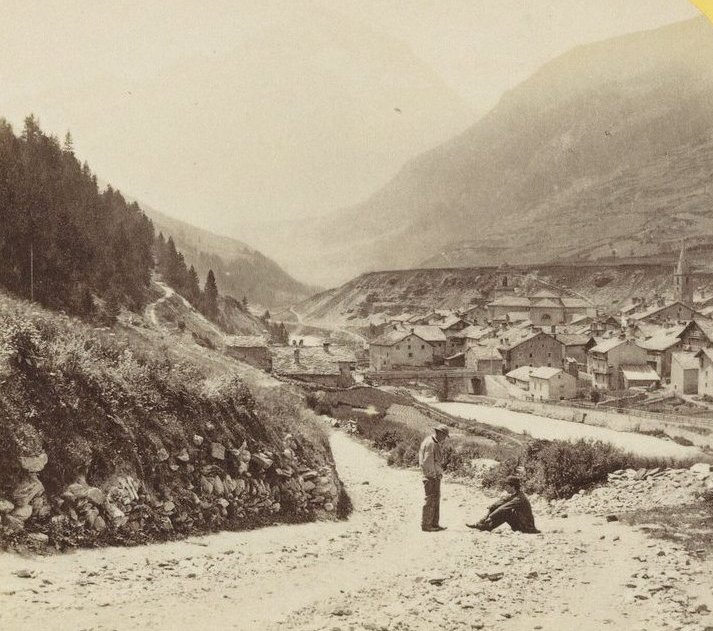
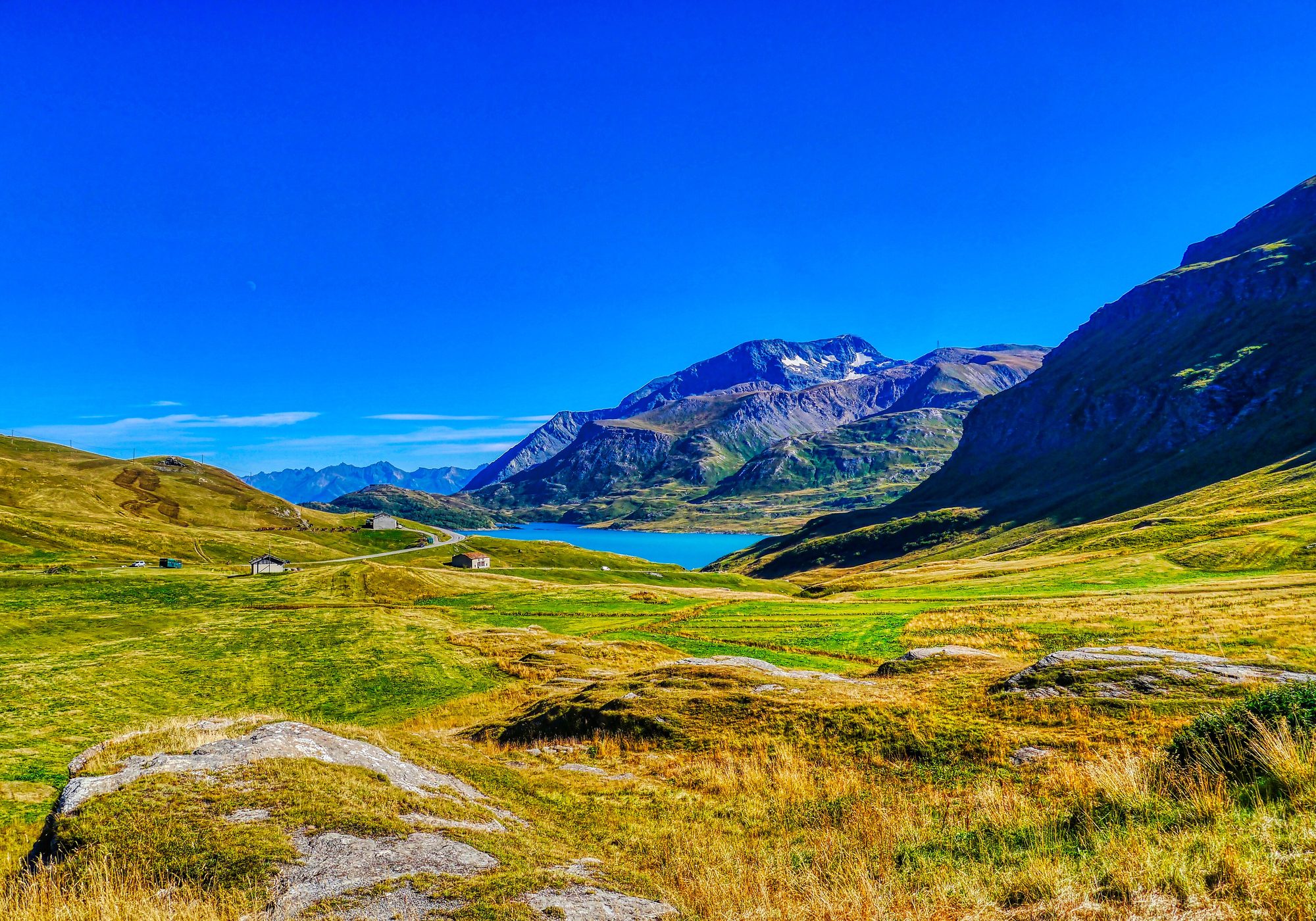
The Col du Mont-Cenis
Savoie, France. The D1006 climbs from Lanslebourg (Val Cenis) to the pass and the lake, open in summer.
Drive or cycle up the hairpins from Lanslebourg and imagine doing it on a porter's shoulders in November.
- In a museum
Musée de la Pyramide du Mont-Cenis
By the lake at the pass, about 15 km from Lanslebourg. Open in summer.
A small museum on the history of the crossing, from Napoleon's road to the dam.
- In a museum
Turner, Snowstorm, Mont Cenis (1820)
Birmingham Museums Trust
Read further
- Marjorie Hope Nicolson, Mountain Gloom and Mountain Glory (Cornell, 1959)
- Edmund Burke, A Philosophical Enquiry into the Origin of Our Ideas of the Sublime and Beautiful (1757)
- Col du Mont-Cenis (French Wikipedia, on the porters and the ramasse)
Images: J. M. W. Turner · Public domain / Rijksmuseum · CC0 / Zairon · CC BY-SA 4.0


From around the same time
The Mirror You Looked Into With Your Back to the View
Eighteenth-century tourists walked to the best viewpoint in the Lake District, turned round, and looked at it in a small dark mirror. Meet the Claude glass, the phone screen of the 1770s.
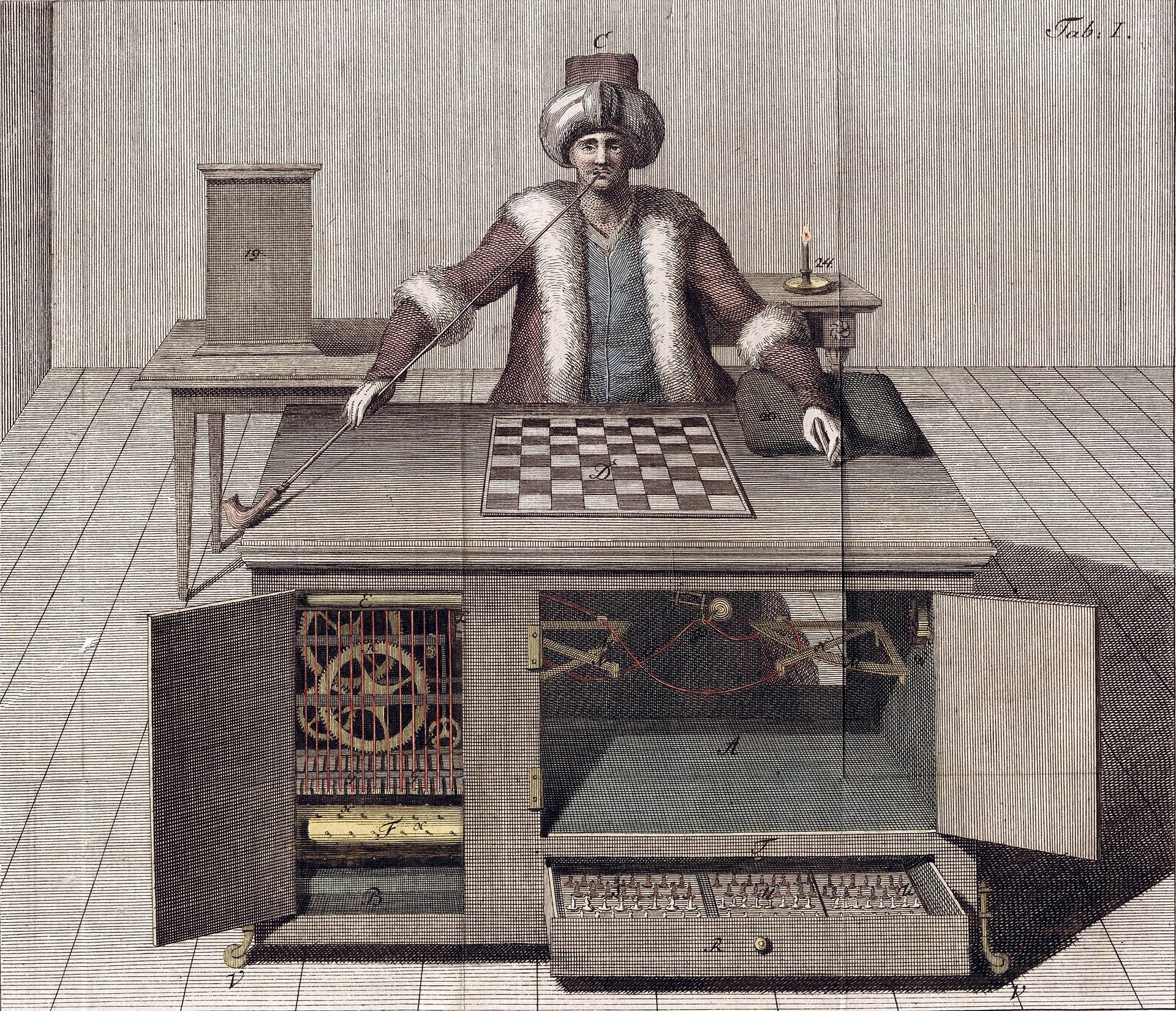
The Chess Machine With a Man Inside
For eighty-four years a mechanical Turk in a turban beat the best players in Europe and America, and supposedly Napoleon too. Clever people spent all that time arguing about how the machine worked. The right answer was the boring one, and it's worth asking why it was so hard to say out loud.
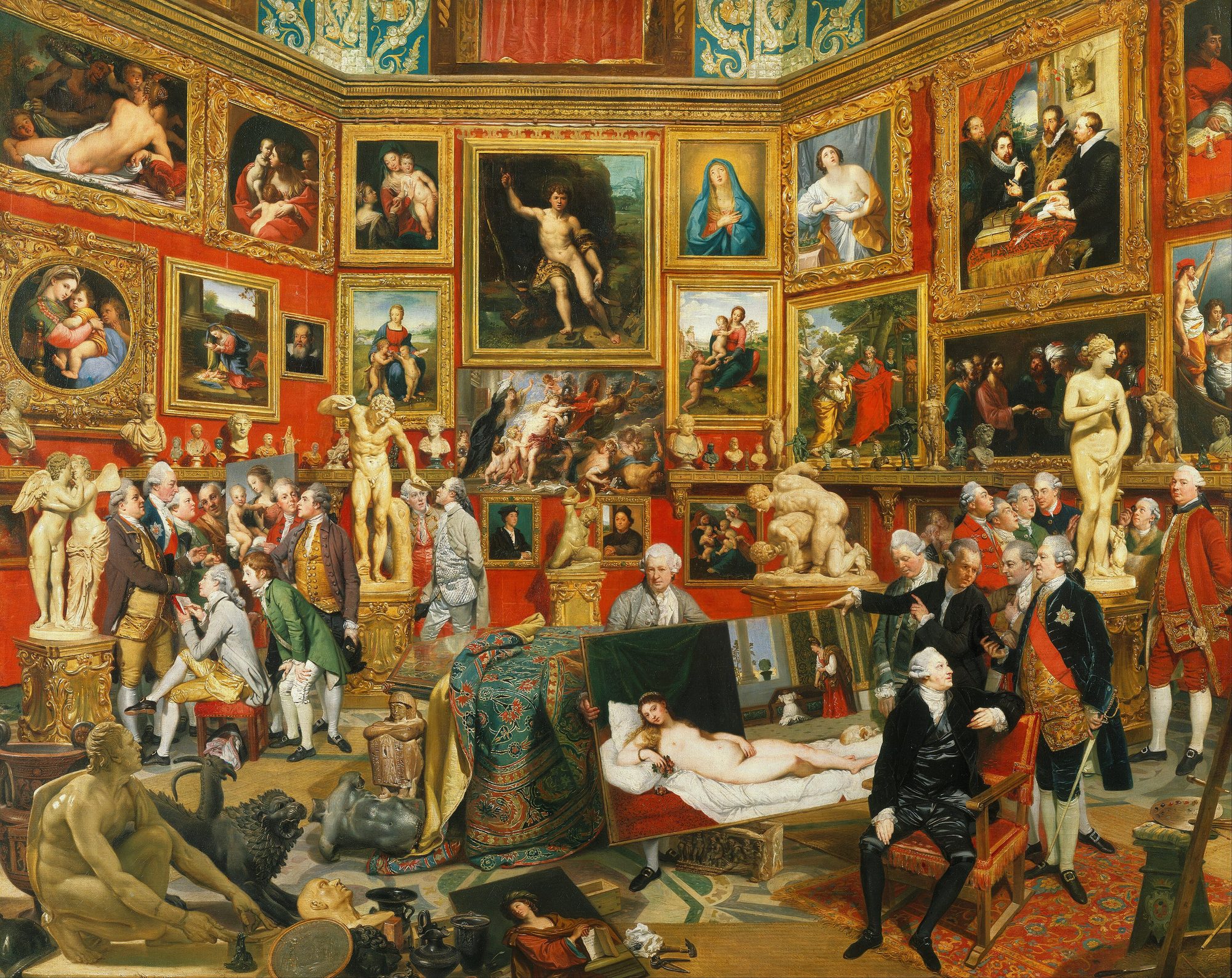
The Most Beautiful Statue in the World (Allegedly)
For two centuries the Venus de' Medici was the thing you crossed Europe to see. Today most people walk past it on the way to the Botticellis. Either our ancestors were wrong, or we are, and both possibilities are more interesting than they sound.