Letters from the Tour · Rome · 1786
Under the Porta del Popolo
Every traveller from the north came into Rome through the same gate. Goethe came through it on an October evening in 1786, under a false name, and finally let himself believe he'd made it.
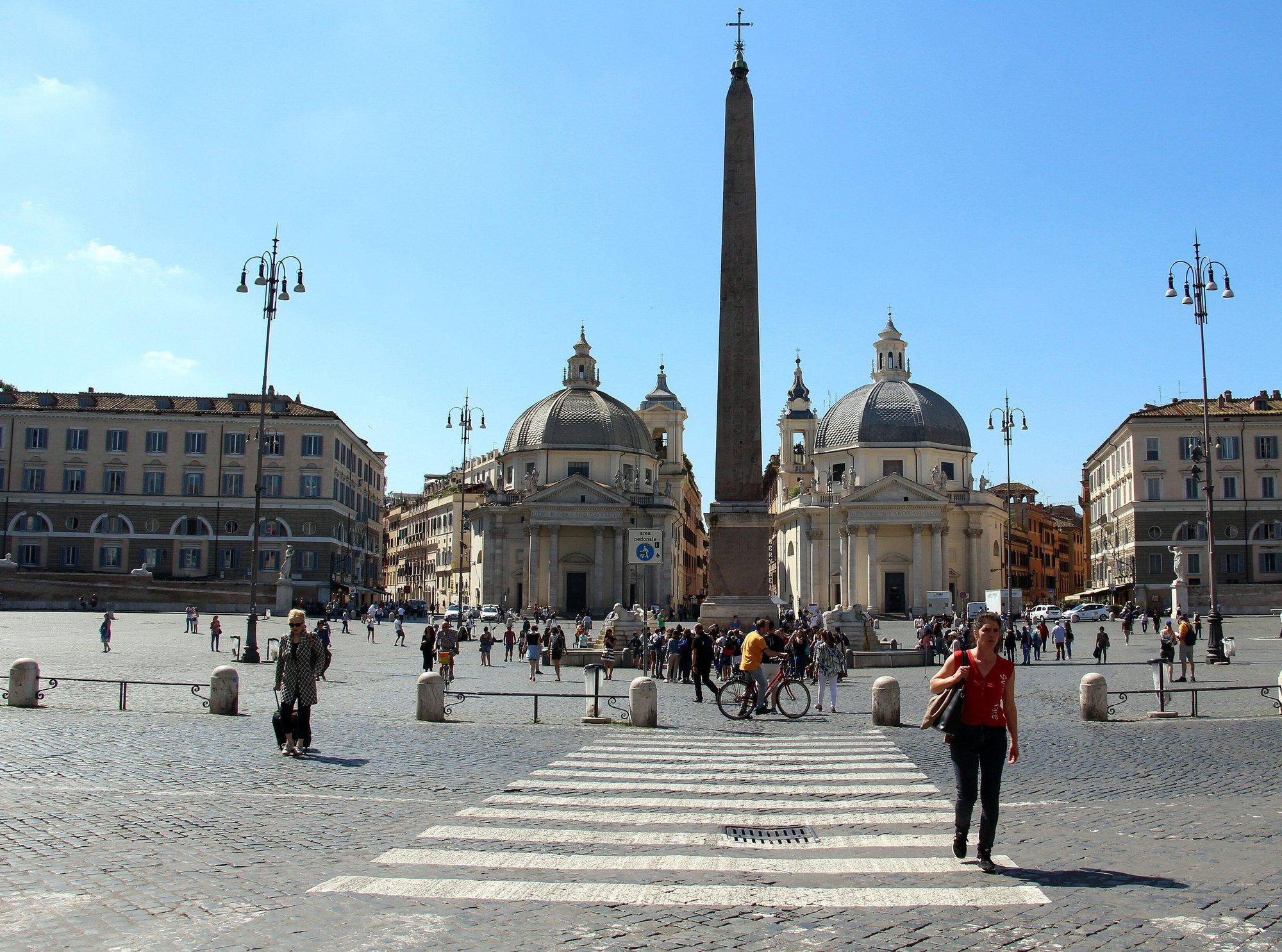
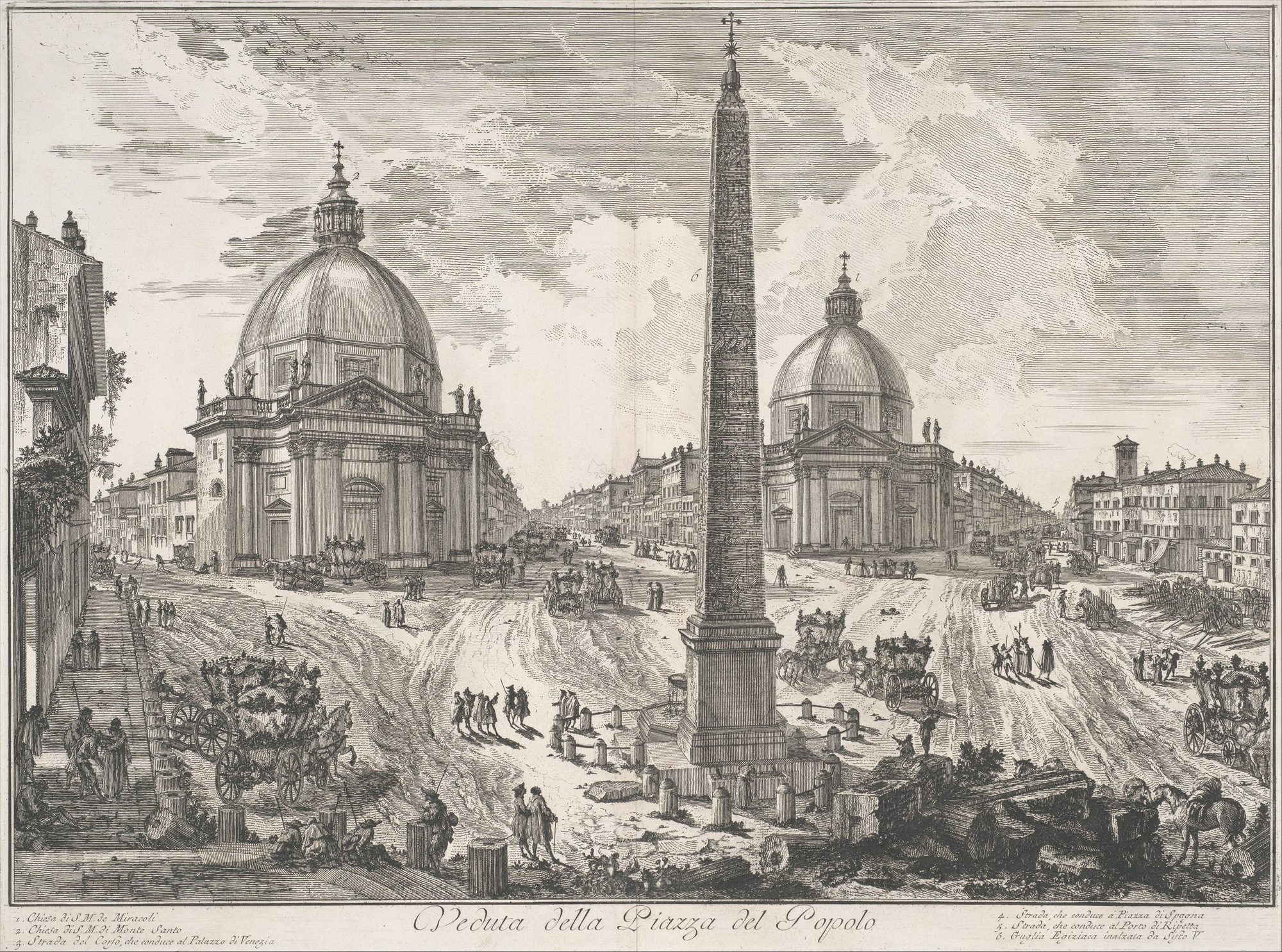 c. 1750Today
Rome, the north gate, then and now
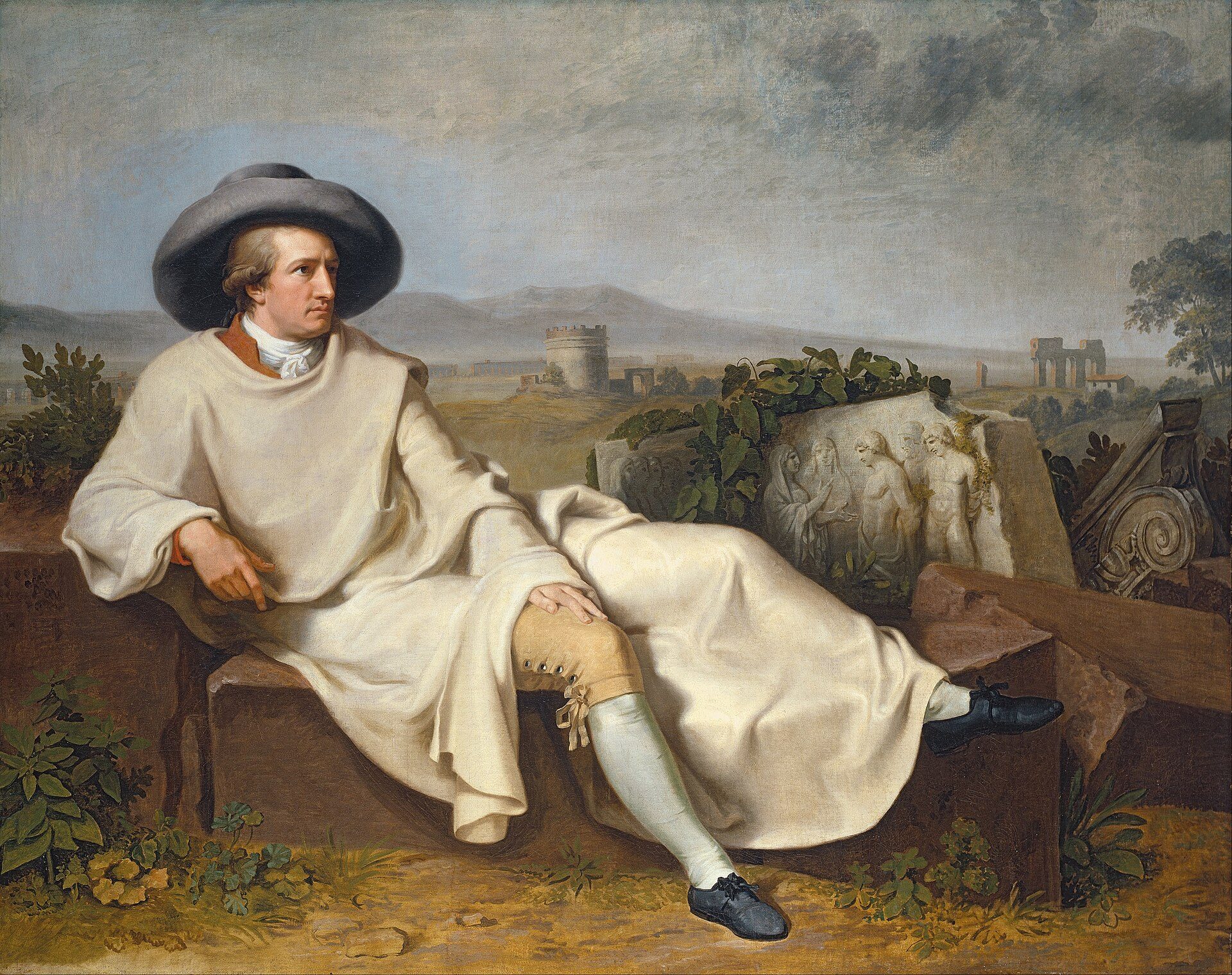
He arrived in the evening, on the twenty-ninth of October, 1786, and had told almost nobody he was coming. Eight weeks earlier he had crept out of Carlsbad at three in the morning, leaving behind a court, a job, a long and complicated attachment to Charlotte von Stein, and a reputation as the most famous writer in Germany. He crossed the Alps as a merchant called Möller, and he entered Rome as a German painter named Filippo Miller.The disguise didn’t last. Within days the German artists in Rome knew exactly who “Signor Miller” was, and they mostly played along.
His first letter home is dated a few days later, and it reads like someone finally breathing out:
At last I can speak out, and greet my friends with good humour. May they pardon my secrecy, and what has been, as it were, a subterranean journey hither. For scarcely to myself did I venture to say whither I was hurrying — even on the road I often had my fears, and it was only as I passed under the Porta del Popolo that I felt certain of reaching Rome. Goethe, Italian Journey, dated Rome, 1 November 1786
Only as I passed under the Porta del Popolo. That gate is where we start.
The front door of Rome
If you came to Rome from the north, and nearly everyone on the Grand Tour did, you came down the old Via Flaminia, the road the Romans built in 220 BC, and it delivered you here. The Porta del Popolo was the city’s front door, and for centuries Rome dressed it like one. In 1655, when Queen Christina of Sweden rode in after giving up her throne and her Protestant faith, Bernini redecorated the inner face of the gate for her. The inscription he left is still there, a welcome mat carved in stone: Felici faustoque ingressui, “for a happy and blessed entrance.”
Step through it and you get the view in the engraving above. Piranesi etched it around 1750, and it is the same view Goethe would have had in his first minute inside the walls.
Look at what Piranesi wanted you to see
Drag the slider and the first thing you notice is that Piranesi lied, beautifully. In his version the square is vast and the churches are colossal. The obelisk shoots up into a sky full of weather, and the people are tiny, scurrying, bent under the scale of it all. In the photograph everything is closer, smaller and friendlier.
That’s because Piranesi was in the souvenir business. His Vedute di Roma, 135 big etchings of the city made over three decades, were what you bought to prove you’d been, the most splendid postcards ever made.Veduta just means “view.” Grand Tourists brought vedute home by the trunkful, paintings by Canaletto and Panini, prints by Piranesi, and hung them in English country houses to remind themselves that they had once stood here. He sold Rome the way people remembered it, bigger than life.
But he didn’t lie about the layout, and the layout is the point. Three streets fan out from the far side of the square, called the Tridente: the Via del Babuino on the left, the Via del Corso straight ahead, and the Via di Ripetta on the right. Between them stand the two churches, Santa Maria dei Miracoli and Santa Maria in Montesanto. They look like twins, and they aren’t. The two plots of land were different widths, so the architects, Rainaldi first, then Bernini and Carlo Fontana, gave one church a round dome and the other an oval one, and fudged the rest so that from the gate you can’t tell. The whole arrangement is a piece of stage scenery, built in the 1660s and 70s so that a traveller stepping through the gate would feel the city opening its arms.
Three thousand years in the middle of the square
Then there’s the obelisk, which is older than Rome by a very long way. It was carved for the sun temple at Heliopolis, begun under the pharaoh Seti I and finished by his son Ramesses II, around thirteen centuries before Christ. In 10 BC Augustus had it shipped across the Mediterranean to stand in the Circus Maximus, as a trophy from the conquest of Egypt. It fell, it was buried, and it was dug up again in the sixteenth century. In 1589 Domenico Fontana raised it here for Pope Sixtus V.
So the first thing that greeted you as you walked into Rome was a monument that had already been ancient when Rome was a village. It’s a small-scale lesson in what the city was: layer on layer, everybody’s trophy, nothing ever quite thrown away.
What changed, and what didn’t
The square Goethe crossed was rougher than the one you’ll walk into. It was really a trapezoid of packed earth and carriage ruts, which is what Piranesi drew. The elegant oval you see today, with its curving walls and the terraces climbing to the Pincio, came a generation later, laid out by Giuseppe Valadier and finished in the 1820s.
The bones are unchanged, though: the gate, the obelisk, the not-quite-twin churches, the three streets. If you stand just inside the arch you’re standing where Piranesi set up his drawing board, and very nearly where a thirty-seven-year-old poet, travelling under a false name, decided he had made it.
Goethe walked a few hundred steps down the middle street, the Corso, to the lodgings of the painter Wilhelm Tischbein, and stayed for most of the next two years. A few days in, he wrote again:
Well, at last I am arrived in this great capital of the world. If fifteen years ago I could have seen it in good company, with a well informed guide, I should have thought myself very fortunate. But as it was to be that I should thus see it alone, and with my own eyes, it is well that this joy has fallen to my lot so late in life. Goethe, Italian Journey, dated Rome, 1 November 1786
Later in the same letter comes the line that might as well be this site’s motto. He says that “a new life begins when a man once sees with his own eyes all that before he has but partially heard or read of.”
That’s the whole idea of the Grand Tour. You’d read about Rome all your life, and then one evening you walked in under the arch.
Go see it
- On the street
Porta del Popolo and the Piazza del Popolo
Rome. Metro line A to Flaminio, which leaves you just outside the gate.
Walk in through the arch, stop, and look straight ahead. That's Piranesi's view, more or less. Then turn round and read the inscription Bernini put over the inner face.
- In a museum
Via del Corso 18, Rome. A few hundred steps down the Corso from the gate. Tuesday to Sunday, 10:00–18:00.
The flat where Goethe lodged with the painter Tischbein, now a small museum.
- Online
Piranesi's Veduta della Piazza del Popolo, full resolution
The Metropolitan Museum's open-access print, via Wikimedia Commons

Read further
Images: Giovanni Battista Piranesi · CC0 / Fred Romero · CC BY 2.0 / Johann Heinrich Wilhelm Tischbein · Public domain


From around the same time
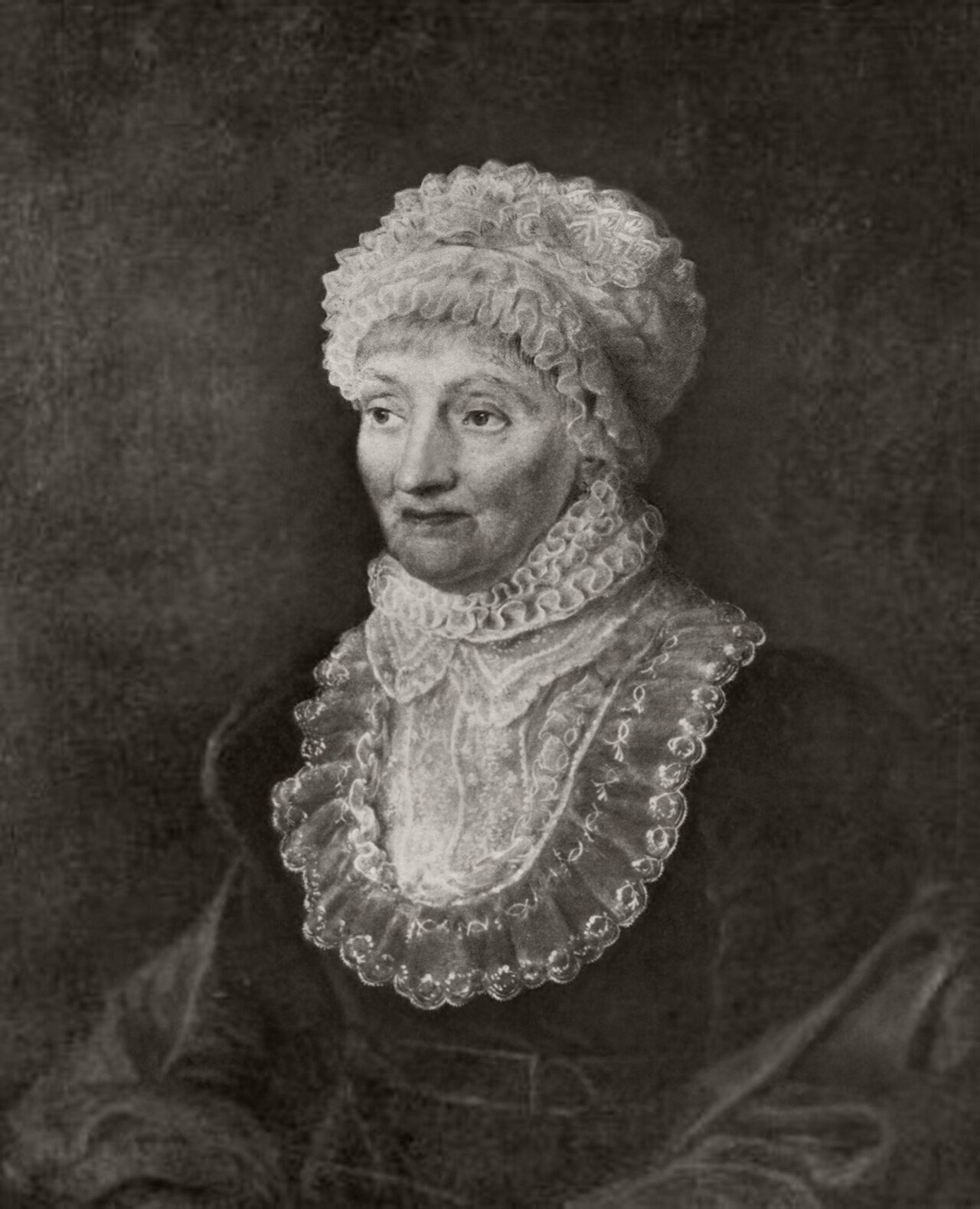
Meanwhile, 1786
The autumn Goethe slipped into Rome under a false name, a woman in Slough found a comet, two men from Chamonix stood on top of Mont Blanc, and Mozart's Figaro opened in Vienna. One year, gone round the whole world.
The Ambassador Who Kept Climbing the Volcano
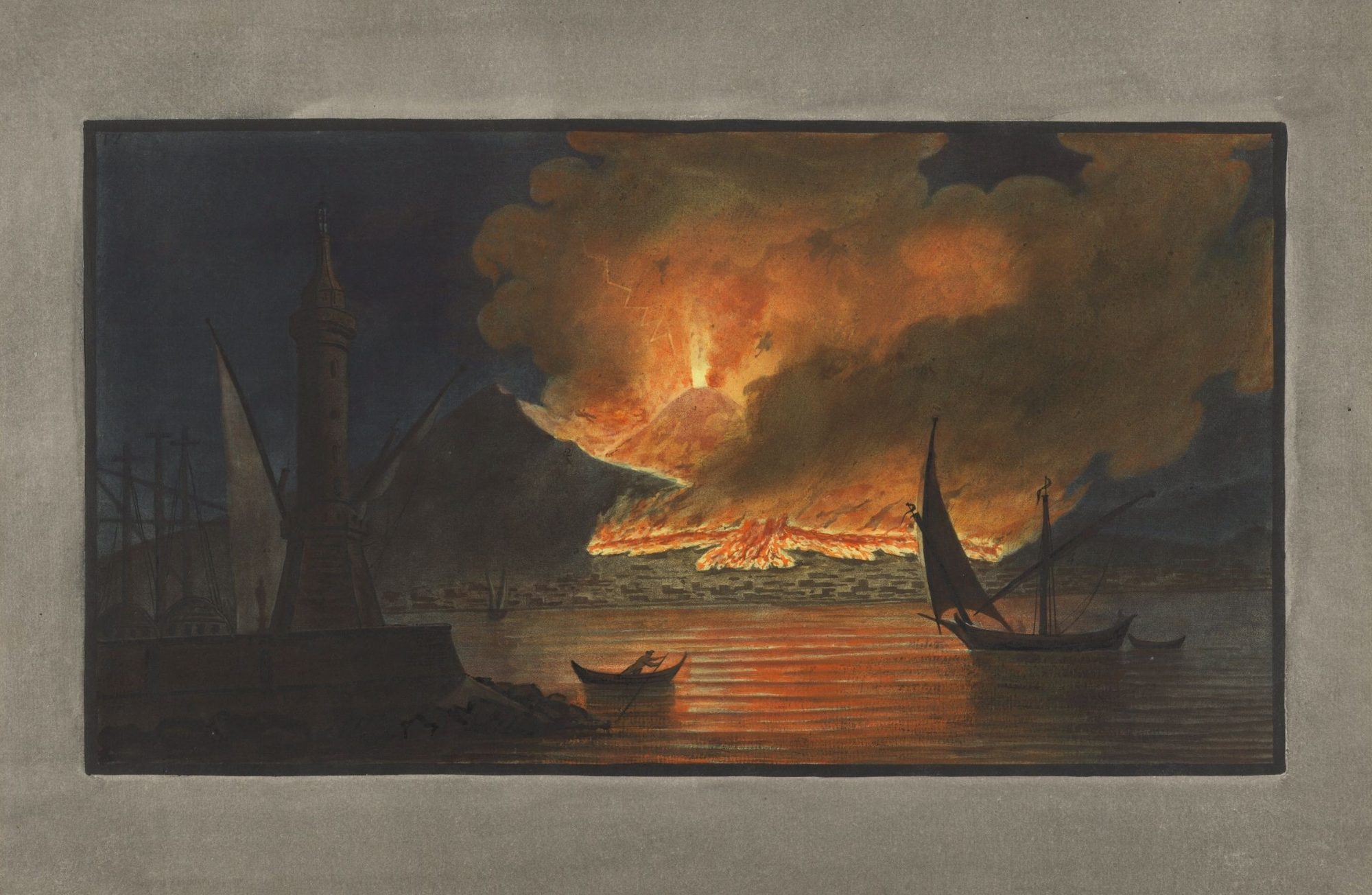
Britain's envoy to Naples was meant to be doing diplomacy. Instead Sir William Hamilton climbed Vesuvius dozens of times, wrote it all up for the Royal Society, and hired a painter to record what he saw. The result is one of the most beautiful science books ever printed.
The Most Beautiful Statue in the World (Allegedly)
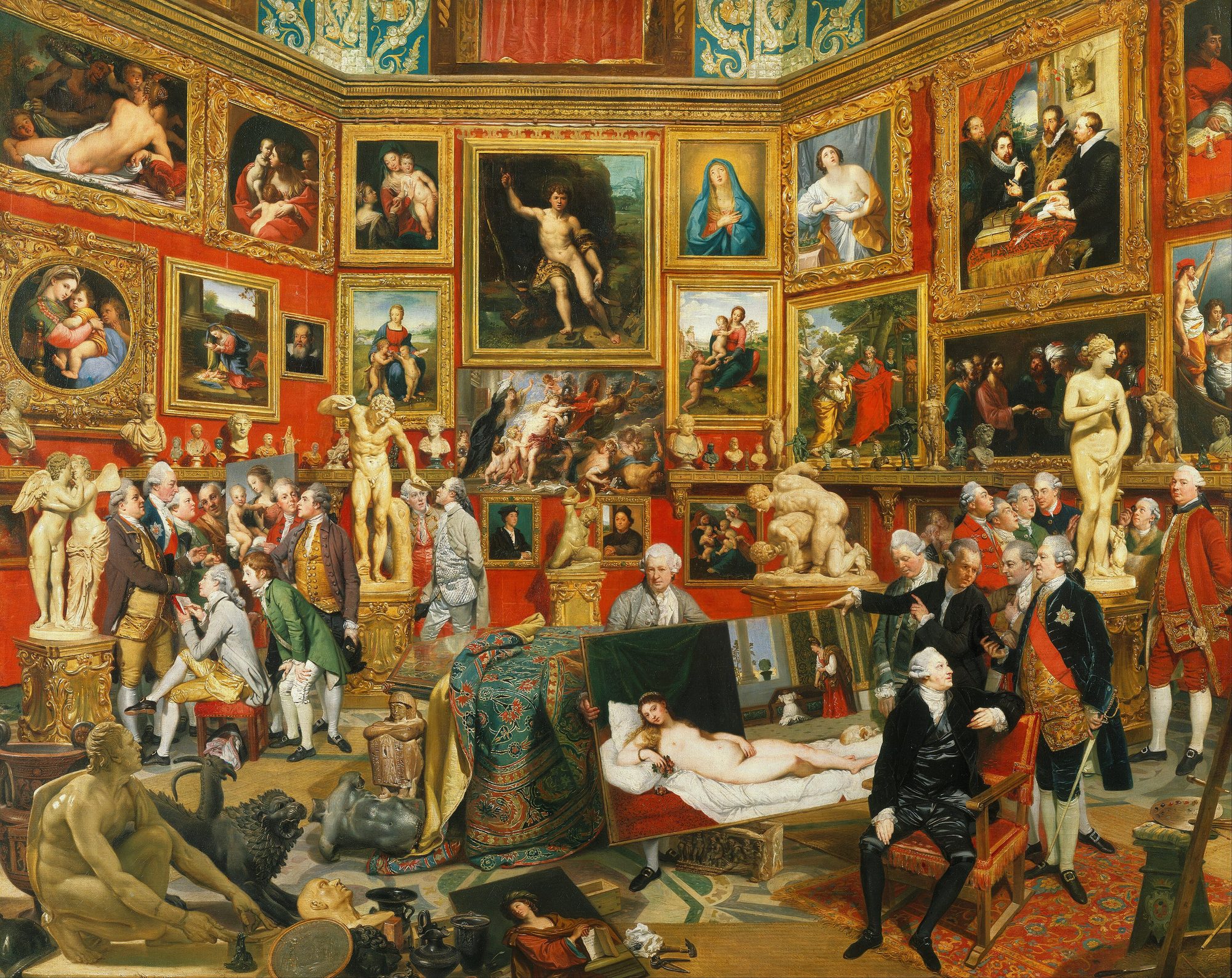
For two centuries the Venus de' Medici was the thing you crossed Europe to see. Today most people walk past it on the way to the Botticellis. Either our ancestors were wrong, or we are, and both possibilities are more interesting than they sound.