Meanwhile · Everywhere · 1786
Meanwhile, 1786
The autumn Goethe slipped into Rome under a false name, a woman in Slough found a comet, two men from Chamonix stood on top of Mont Blanc, and Mozart's Figaro opened in Vienna. One year, gone round the whole world.
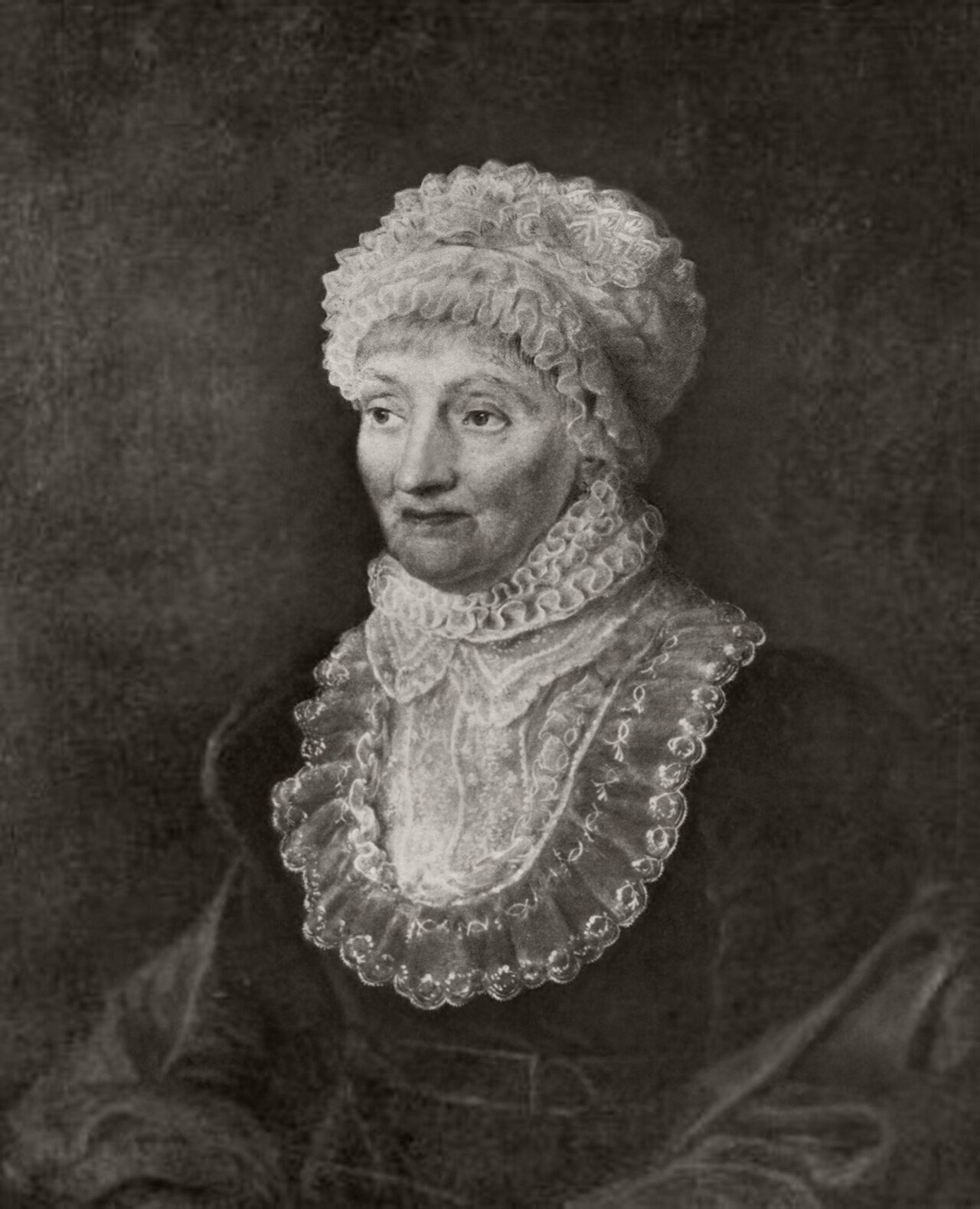
Our letters from the Grand Tour tend to look at the world through one window, the window of a carriage rattling down to Rome. It’s a lovely view. But while our travellers were looking at ruins, the rest of the planet was getting on with its own business, and it’s worth leaning out of the window now and then to look at it.
So here is 1786, the year Goethe crept out of Carlsbad and into Rome, seen a little more widely.
Spring: an opera, and a ship at the end of the world
On the first of May, in the Burgtheater in Vienna, Mozart’s The Marriage of Figaro had its premiere. It’s an opera in which a servant outwits his aristocratic master, adapted from a French play so sharp about privilege that it had been banned in Paris. Three years before the Bastille fell, Vienna was humming tunes about a valet who was cleverer than his count.
That April, on the far side of the world, the French explorer La Pérouse had anchored at Easter Island on a royal voyage meant to rival Captain Cook’s. By July his ships were on the coast of Alaska, where at Lituya Bay a tidal race overturned his boats and drowned twenty-one of his men. They would be the expedition’s first great loss, not its last.
Summer: a comet, and a mountain
On the night of 1 August, in Slough, just outside Windsor, Caroline Herschel was sweeping the sky alone while her brother William was away. She found a faint smudge that hadn’t been there before. It was a comet, the first of eight she would discover, and it made her the first woman credited with discovering one.“Credited” matters. In 1702 the German astronomer Maria Kirch found a comet first, but it was published under her husband’s name. Caroline Herschel, unusually, got her name on hers. Before long, the King was paying her a salary as her brother’s assistant, which made her one of the first women ever paid to do science.
A week later, on 8 August, a crystal hunter called Jacques Balmat and a doctor called Michel-Gabriel Paccard climbed out of Chamonix and stood on the summit of Mont Blanc, the highest point in western Europe. Nobody had done it before. It matters for our story because Grand Tourists had spent a century treating the Alps as an obstacle, a terrifying thing to be carried over in a chair at Mont Cenis on the way to Italy. Within a generation the mountains would become the destination themselves.
That July, a farmer in Ayrshire named Robert Burns, so broke he was planning to emigrate to Jamaica, published a book of poems in Kilmarnock to pay for the passage. It sold out in a month, and he never went.
On 11 August, a sea captain named Francis Light took possession of the island of Penang, off the Malay coast, for the East India Company, naming it Prince of Wales Island and laying out the town that became George Town. Six days later, at his palace of Sanssouci in Potsdam, Frederick the Great of Prussia died in his armchair, aged seventy-four, after forty-six years on the throne. And the next day, in London, the government settled on a distant bay on the east coast of Australia, Botany Bay, as the place to send its convicts. The First Fleet sailed the following May.
Autumn: famine and unrest
At the end of August, in western Massachusetts, debt-ridden farmers, many of them veterans of the Revolution, shut down the county court at Northampton to stop the foreclosures on their farms. It was the start of Shays’ Rebellion, and it so alarmed the new country’s leaders that it helped push them toward writing a stronger Constitution the next year.
In Japan the shogun Tokugawa Ieharu died that autumn, and his powerful chief minister Tanuma Okitsugu fell from power soon after. The country was in the middle of the Tenmei famine, one of the worst in its history, made worse by the great eruption of Mount Asama in 1783, whose ash had ruined harvests across the country.
On the island of Taiwan, near the end of the year, a secret society led by Lin Shuangwen rose against the rule of the Qing dynasty. It became one of the largest uprisings of the Qianlong emperor’s long reign, and it took the empire more than a year to crush it.
And in Rome
On the evening of 29 October, a thirty-seven-year-old in a travelling coat passed under the Porta del Popolo and finally allowed himself to believe he’d arrived.
We have a habit of thinking of history as separate stories: the history of music, or science, or Japan. But they all happened at once, under the same sky. The same summer that Caroline Herschel found her comet, Burns was correcting his proofs, Frederick lay dying in his armchair, and in Edo the rice ran short. Somewhere a seventeen-year-old Corsican named Napoleone Buonaparte was a junior artillery officer in the French garrison at Valence.He was commissioned in September 1785, so by 1786 he was a second lieutenant in the La Fère artillery regiment, reading voraciously and writing gloomy notes to himself. History was about to arrive at his door too.
That’s what Meanwhile is for. Whatever corner of the past we’re looking at, it helps to remember the rest of the world was there too.
Go see it
- In a museum
19 New King Street, Bath. The townhouse where Caroline and William lived before they moved to Slough, and where William found Uranus in 1781.
- On the street
The Balmat and Paccard monuments
The centre of Chamonix, by the river Arve. Balmat stands with Saussure, pointing up at the summit, and Paccard has his own statue nearby, looking up at the mountain.
- On the street
George Town, Penang
Malaysia. The town Francis Light founded in 1786, now a UNESCO World Heritage Site.
- Online
Burns's Kilmarnock edition, scanned
Search the National Library of Scotland's digital gallery for "Poems, Chiefly in the Scottish Dialect"
Read further
Images: M. F. Tielemanm · Public domain

From around the same time
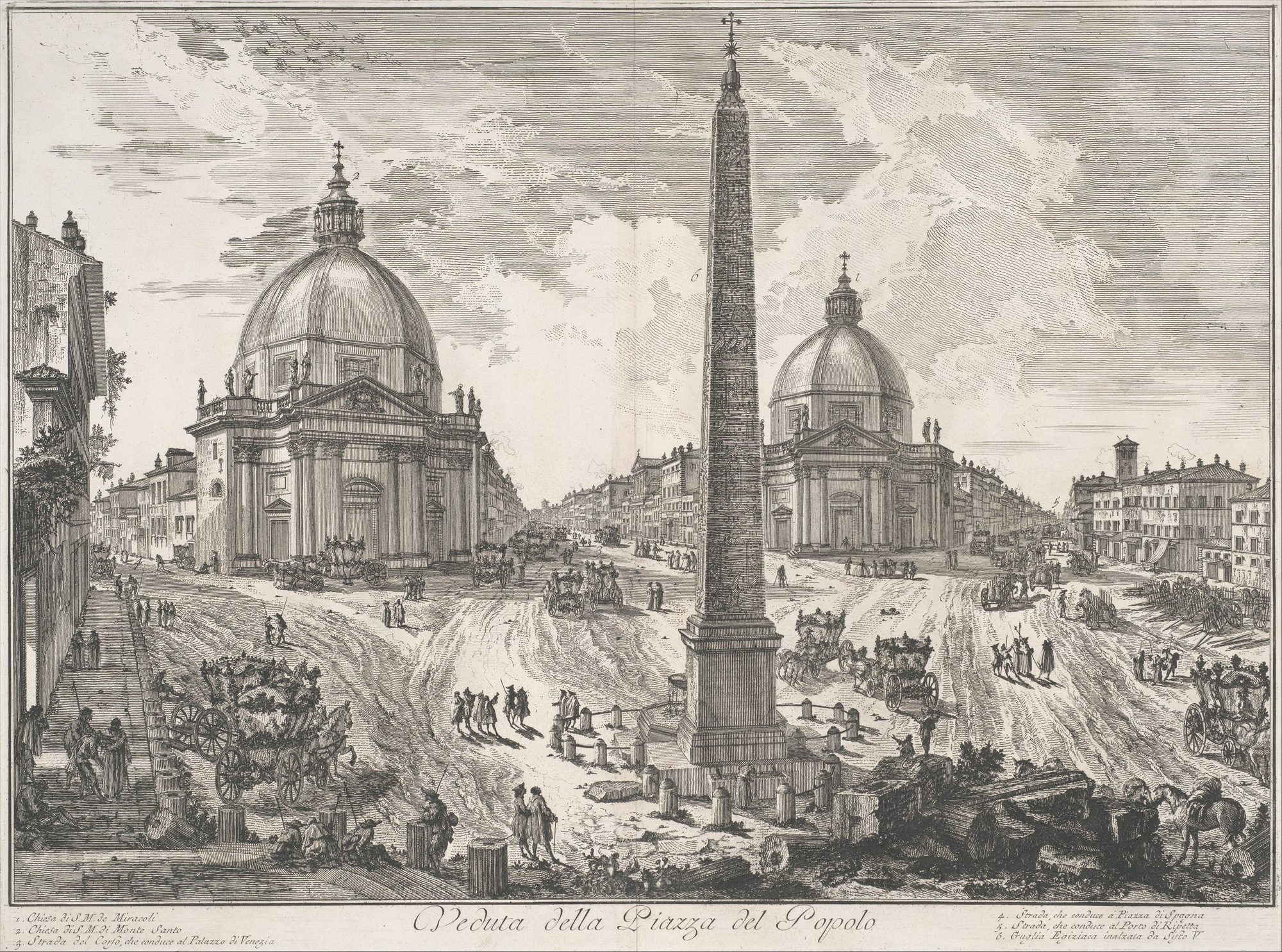
Under the Porta del Popolo
Every traveller from the north came into Rome through the same gate. Goethe came through it on an October evening in 1786, under a false name, and finally let himself believe he'd made it.
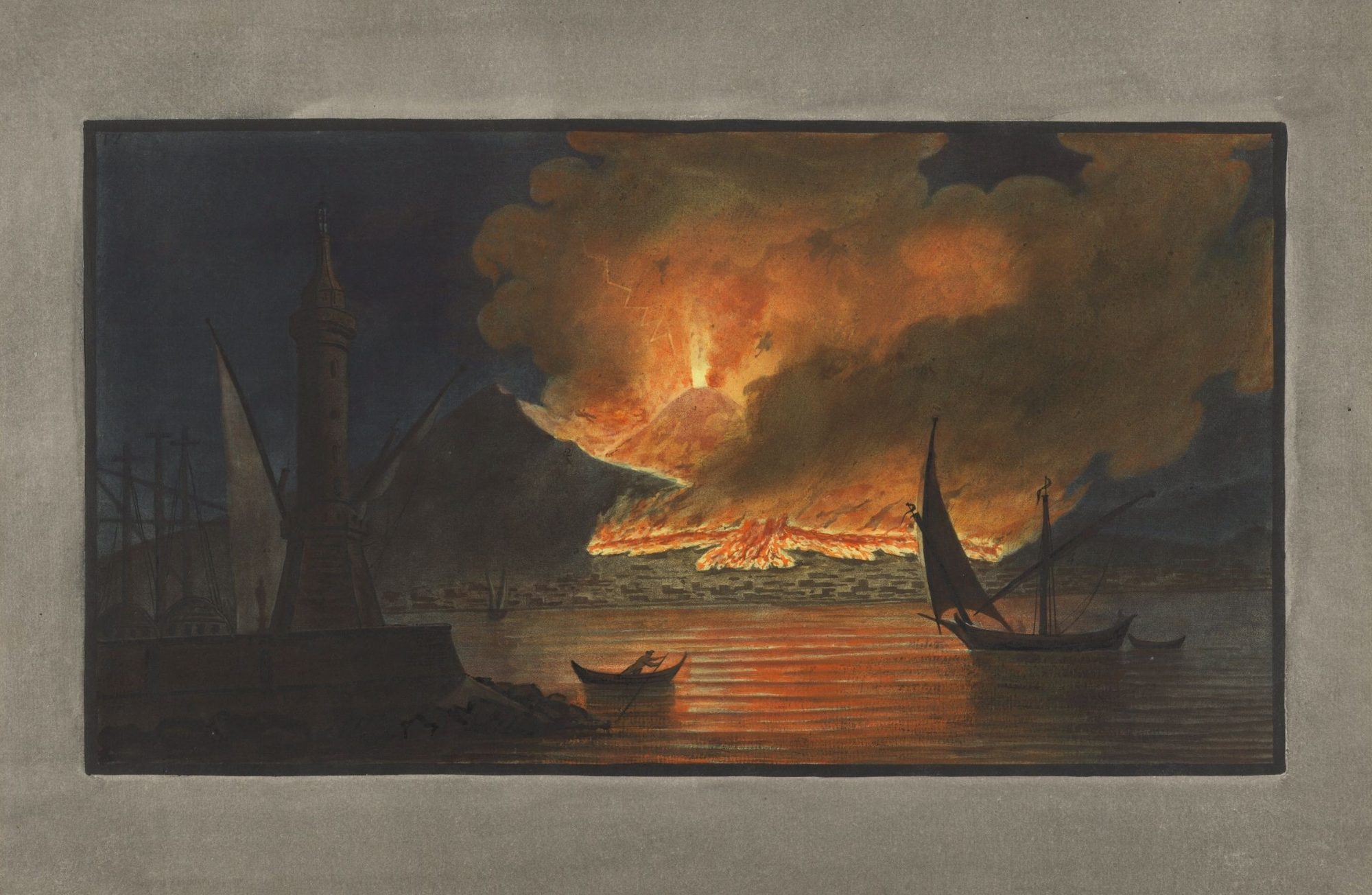
The Ambassador Who Kept Climbing the Volcano
Britain's envoy to Naples was meant to be doing diplomacy. Instead Sir William Hamilton climbed Vesuvius dozens of times, wrote it all up for the Royal Society, and hired a painter to record what he saw. The result is one of the most beautiful science books ever printed.
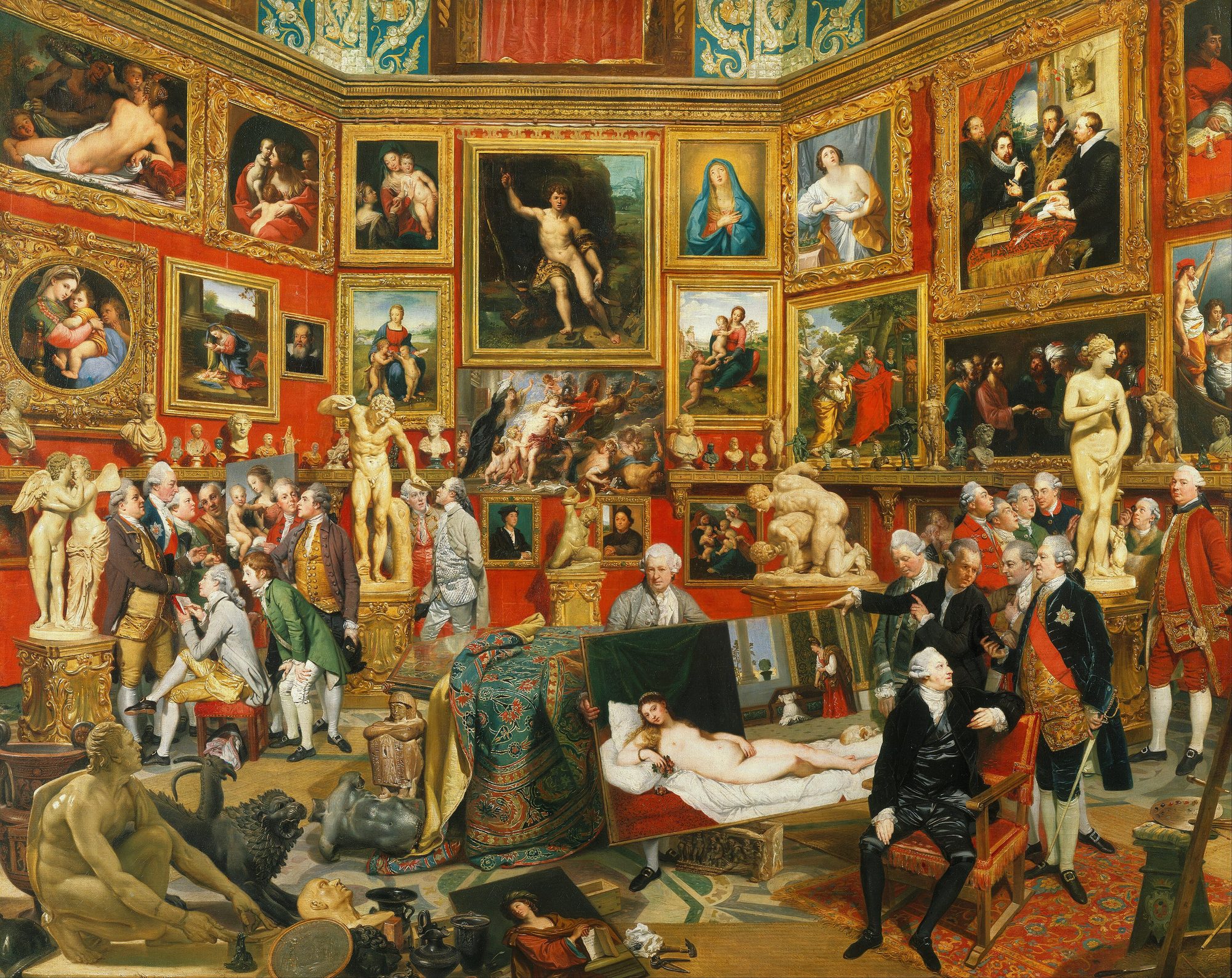
The Most Beautiful Statue in the World (Allegedly)
For two centuries the Venus de' Medici was the thing you crossed Europe to see. Today most people walk past it on the way to the Botticellis. Either our ancestors were wrong, or we are, and both possibilities are more interesting than they sound.